
Electrolysis Explained Without the Mystery
Electrolysis is often described simply as permanent hair removal, but that short description skips over what is actually happening during a treatment. Clients frequently ask why certain steps are necessary, why the hair is removed the way it is, and what all the equipment is doing.
This guide walks through the process clearly, explaining both the technical side and what it means for the person on the table.
Step One: Assessing the Hair and Skin
Before any treatment begins, the hair and skin are assessed.
This includes:
- Hair thickness and depth
- Growth stage
- Skin sensitivity and hydration
- Area being treated
Electrolysis targets the hair growth center. That center sits at different depths depending on the hair and body area. Proper assessment ensures the treatment reaches the correct structure without damaging surrounding tissue.
Step Two: The Probe and the Follicle
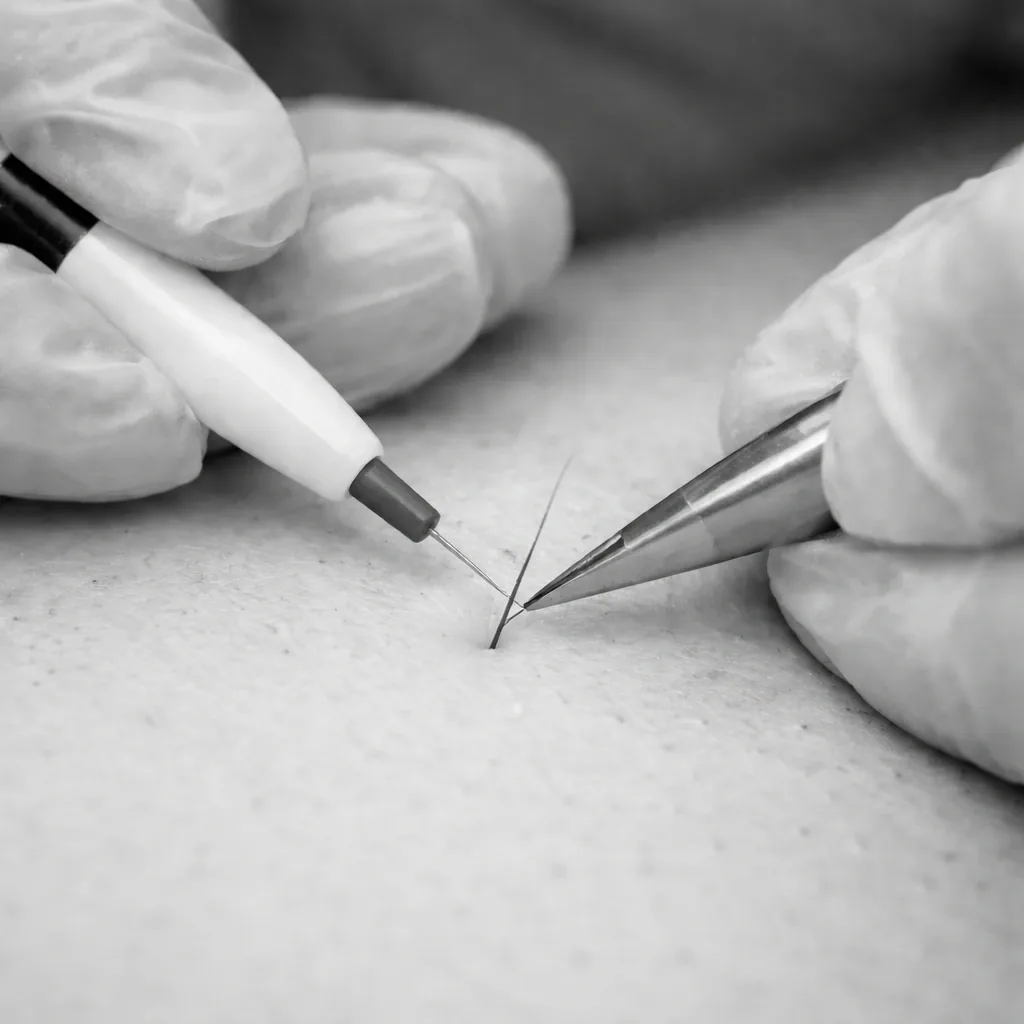
Electrolysis uses a very fine sterile probe. This probe is not a needle and it does not pierce the skin. It slides gently into the natural opening of the hair follicle alongside the hair shaft.
The goal is accuracy, not force.
When the probe reaches the base of the follicle, energy is delivered in a controlled and localized way.
Step Three: What the Energy Does
Thermolysis
Thermolysis uses high-frequency alternating current to generate heat inside the follicle. That heat disables the cells responsible for hair growth.
Key points:
- Energy stays localized to the follicle
- No pigment is involved
- Treatment is fast per hair
Thermolysis is efficient and commonly used for many areas.
The Blend Method
The blend method combines thermolysis and galvanic current.
Here is what happens:
- Galvanic current creates a chemical reaction using the body’s natural salts and moisture
- This reaction produces sodium hydroxide inside the follicle
- Thermolysis adds heat to accelerate and strengthen the effect
The blend method is particularly effective for:
- Deep or distorted follicles
- Coarse hair
- Hormonal hair
- Areas where hair has been treated unsuccessfully before
It works more slowly per hair, but it is thorough.
Step Four: Why the Hair Is Gently Removed
After the follicle has been properly treated, the hair is gently lifted out with sterile tweezers.
This step is important and often misunderstood.
If the follicle has been fully disabled:
- The hair slides out easily
- There is no resistance
- No plucking sensation should occur
The removal is not what destroys the follicle. It is simply a confirmation that the treatment was effective. Resistance indicates the follicle was not fully treated and adjustments are made.
Step Five: Skin Response and Healing
After treatment, the skin responds naturally.
Normal responses include:
- Mild redness
- Slight swelling
- Warmth
These reactions indicate increased circulation and healing activity. Proper technique minimizes trauma and supports quick recovery.
Optional Skin Treatments: Cataphoresis and Anaphoresis
Some electrolysis sessions include optional finishing techniques that support skin health and comfort.
Cataphoresis
Cataphoresis uses a mild direct current with negative polarity.
Its purpose:
- Soothes and calms the skin
- Reduces redness and inflammation
- Helps close follicles
- Normalizes skin pH
Clients often notice the skin feels calmer and less reactive afterward.
Anaphoresis
Anaphoresis uses positive polarity current.
Its purpose:
- Softens tissue
- Increases circulation
- Helps prepare the skin before treatment
- Improves comfort in sensitive areas
Anaphoresis is often used selectively depending on skin type and treatment goals.
The Instruments Involved
Electrolysis equipment typically includes:
- A professional epilator machine
- Sterile single-use probes
- Foot pedal or hand control for precision
- Magnification and proper lighting
- Sterile tweezers
- Optional current modalities for skin support
Each component plays a role in accuracy, safety, and consistency.
Why Electrolysis Takes Time
Electrolysis treats hairs individually and permanently. Only hairs in the active growth phase can be disabled. New hairs appear over time as follicles cycle or become hormonally active.
Progress happens through:
- Consistent sessions
- Gradual clearance
- Permanent removal of treated follicles
Speed is never the goal. Precision is.
Final Takeaway
Electrolysis is not guesswork or surface-level hair removal. It is a controlled biological process that requires accuracy, patience, and technical skill.
Every step, from probe insertion to hair release to optional skin-calming techniques, serves a purpose. When performed correctly, electrolysis removes hair permanently while respecting the skin.
Understanding what is happening makes the process less intimidating and reinforces why technique matters more than speed.
Where this precision matters most. The clearest case for treating one follicle at a time is a surgical donor site, where a hair the laser could not see becomes a hair growing inside a urethra for the rest of somebody's life. The donor site guide for phalloplasty and metoidioplasty covers what that work involves.
The rest of the electrolysis picture. the pain map, every area ranked, what electrolysis is, why the Apilus xCell Pro matters, anaphoresis and cataphoresis explained and the history of electrolysis.