
Hair 101: Structure, Growth Cycles, and Why Hair Removal Works or Fails
Hair is not random. It is a structured biological system with defined anatomy, predictable cycles, and region specific behavior. Understanding how hair is built and how it grows explains why some hair removal methods succeed, others stall, and some fail entirely.
This knowledge is the foundation of effective hair removal.
The Anatomy of Hair

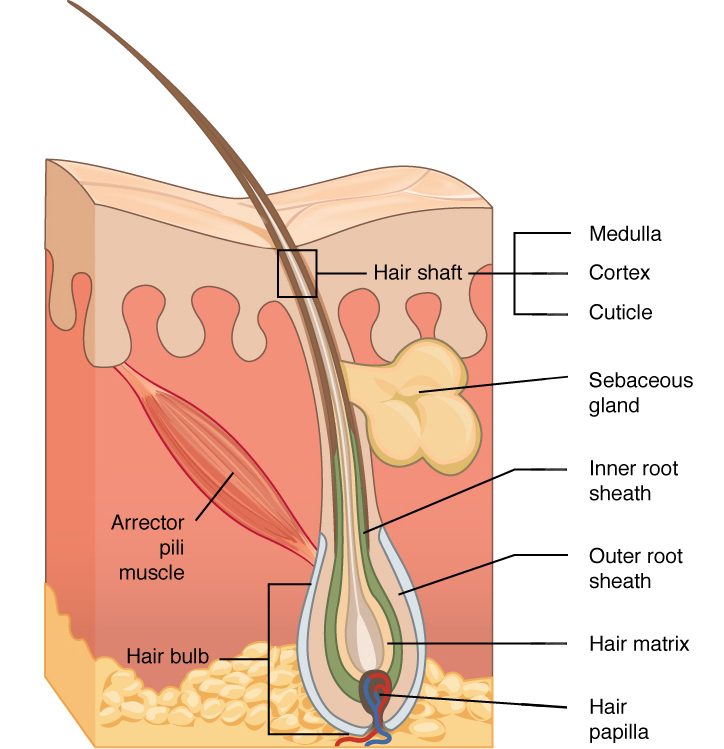
Every hair has two main components.
1. The Hair Shaft
The visible portion above the skin.
- Cuticle: outer protective layer that shields the hair
- Cortex: provides strength, elasticity, and contains pigment
- Medulla: present mainly in coarse hair, often absent in fine hair
Shaving, trimming, and depilatory creams affect only the shaft.
2. The Hair Follicle
The living structure beneath the skin.
- Bulb: growth factory of the hair
- Dermal papilla: blood supply and growth signaling center
- Matrix cells: rapidly dividing cells that create the hair
- Sebaceous gland: produces oil
- Arrector pili muscle: causes hair to stand
Permanent hair removal depends on disabling the follicle and papilla, not the shaft.
The Hair Growth Cycle
Hair grows in repeating phases, not continuously.
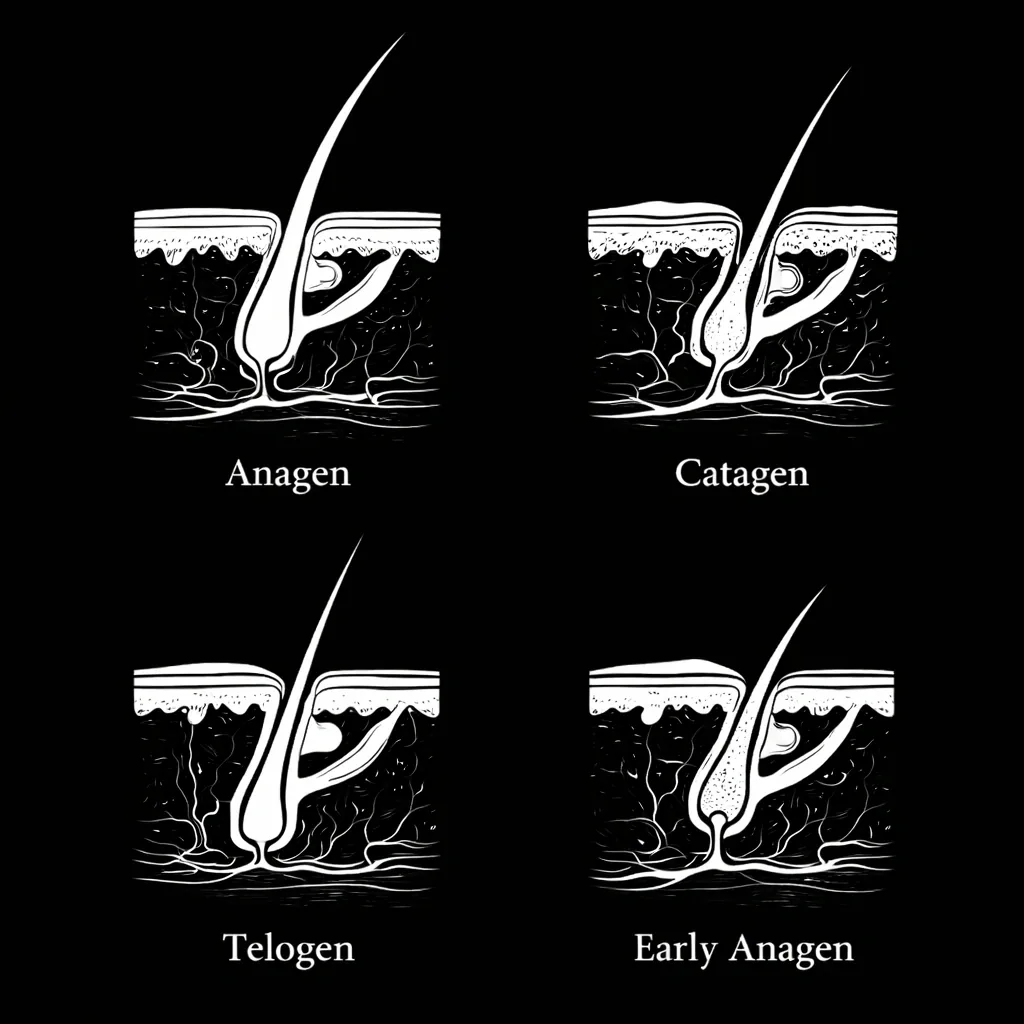
Anagen: Growth phase
Hair is attached to the papilla and actively growing. This is the optimal phase for laser reduction and the most reliable phase for permanent electrolysis.
Catagen: Transition phase
Hair detaches from its blood supply. Energy based treatments become less predictable.
Telogen: Resting phase
Hair sits dormant before shedding. There is little to target during this phase.
Only a percentage of hair is in anagen at any time, which is why multiple sessions are required regardless of method.
Growth Timelines by Body Area
Hair cycles differ depending on location.
- Face: fast cycling, frequent treatment intervals
- Underarms and bikini: moderate cycling
- Legs, arms, back: slow cycling, longer spacing required
This explains why facial hair demands more frequent sessions and body hair requires patience rather than overtreatment.
Hair Color, Thickness, and Density
Hair color is determined by melanin.
- Dark coarse hair: strongest laser target
- Light, red, grey, or white hair: weak or absent laser response
- Fine hair: limited heat retention, reduced laser effectiveness
Laser relies on pigment. Electrolysis does not. This is why electrolysis is the only method capable of permanently removing all hair types.
How Hair Removal Methods Interact With Hair Biology
Shaving
- Affects: shaft only
- Result: blunt regrowth sensation
- Does not: increase thickness, density, or growth rate
Waxing and Threading
- Affects: removes hair from the follicle opening
- Result: longer smooth period
- Can cause: cycle distortion, irritation, ingrowns in some individuals
Laser Hair Removal
- Targets: melanin in anagen hairs
- Achieves: long term reduction when done correctly
- Limited by: hair color, hair fineness, hormonal influence, improper settings
Electrolysis
- Targets: follicle directly
- Achieves: permanent removal hair by hair
- Works on: all hair colors, textures, and body areas
Temporary methods affect the shaft. Laser conditionally weakens follicles. Electrolysis disables follicles permanently.
What Influences Hair Growth, Delay, or Baldness
- Genetics: determines baseline density, thickness, curl pattern, and follicle hormone sensitivity
- Hormones: can stimulate terminal hair growth on the face and body or accelerate scalp thinning depending on genetic response
- Age: alters cycle length, slows growth, and can change texture and color
- Blood supply: stronger circulation supports faster growth, reduced supply slows growth
- Inflammation: can disrupt cycles, increase shedding, and create patchy density
- Medications: may trigger shedding, new growth, or delayed growth depending on the medication
- Stress: can push hairs into resting phase, causing delayed shedding weeks or months later
- Nutrition: deficiencies can weaken shaft quality, slow growth, and increase breakage
- Mechanical trauma: repeated friction, pulling, or tension can weaken follicles over time
- UV exposure: degrades shaft integrity and accelerates breakage
- Scarring: permanently reduces or eliminates growth where follicles are destroyed
Body Hair vs Scalp Hair
Scalp hair has a prolonged growth phase, allowing length and density. Body hair has shorter growth phases and longer rest periods, limiting length and making it more responsive to permanent removal methods.
Why Results Depend on Respecting Hair Biology
Hair removal works when biology is respected. When structure, cycle timing, and hair type are ignored, results suffer. There is no shortcut around this.
Final Thoughts
Hair removal is not about chasing trends, deals, or promises. It is about understanding biology and choosing the method that aligns with it. When the structure of hair, its growth cycle, and its natural limitations are respected, results follow predictably. When they are ignored, frustration sets in.
Whether someone chooses temporary grooming, long term reduction, or permanent removal, the outcome is always determined by how well the method matches the hair. Education turns hair removal from guesswork into a strategy.
If you want the why behind this. seasonal hair removal, choosing the right laser machine, what a BROzilian involves, anaphoresis and cataphoresis explained and when hair removal stops working.