Sugaring Hair Removal: What It Is, How It Works, and What to Expect
Sugaring looks simple. It’s just sugar, water, and lemon, but how it behaves on the skin is very different from wax, and that difference shows up in technique, comfort, cost, and hygiene.
What Is Sugaring?
Sugaring is a paste made from:
- Sugar
- Water
- Lemon (or another acid)
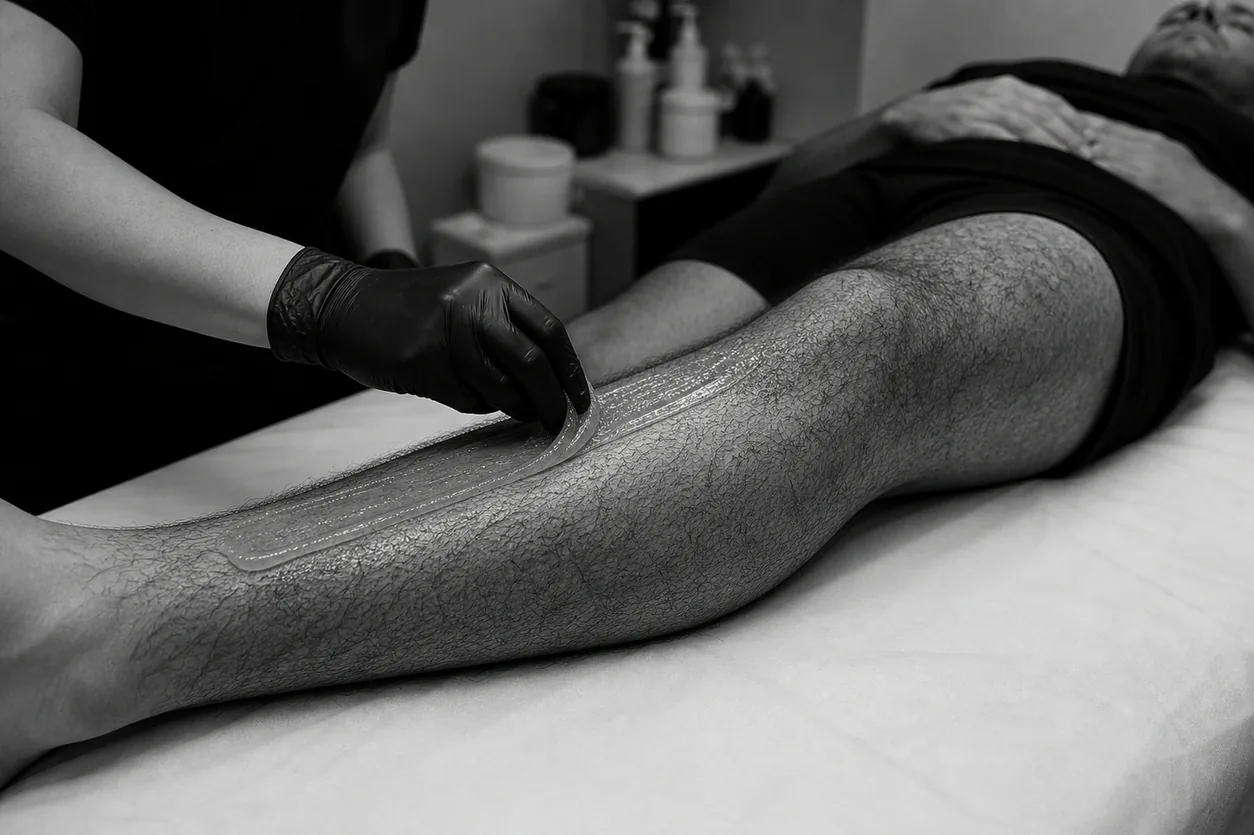
Heated and cooked to a soft, pliable consistency, it’s used at body temperature or slightly warm, not hot like wax. The paste is molded onto the skin and flicked off to remove hair.
How It’s Made (Simple Breakdown)
At its core, it’s controlled candy-making:
- Heat sugar + water + acid
- Cook until it reaches a soft-ball stage
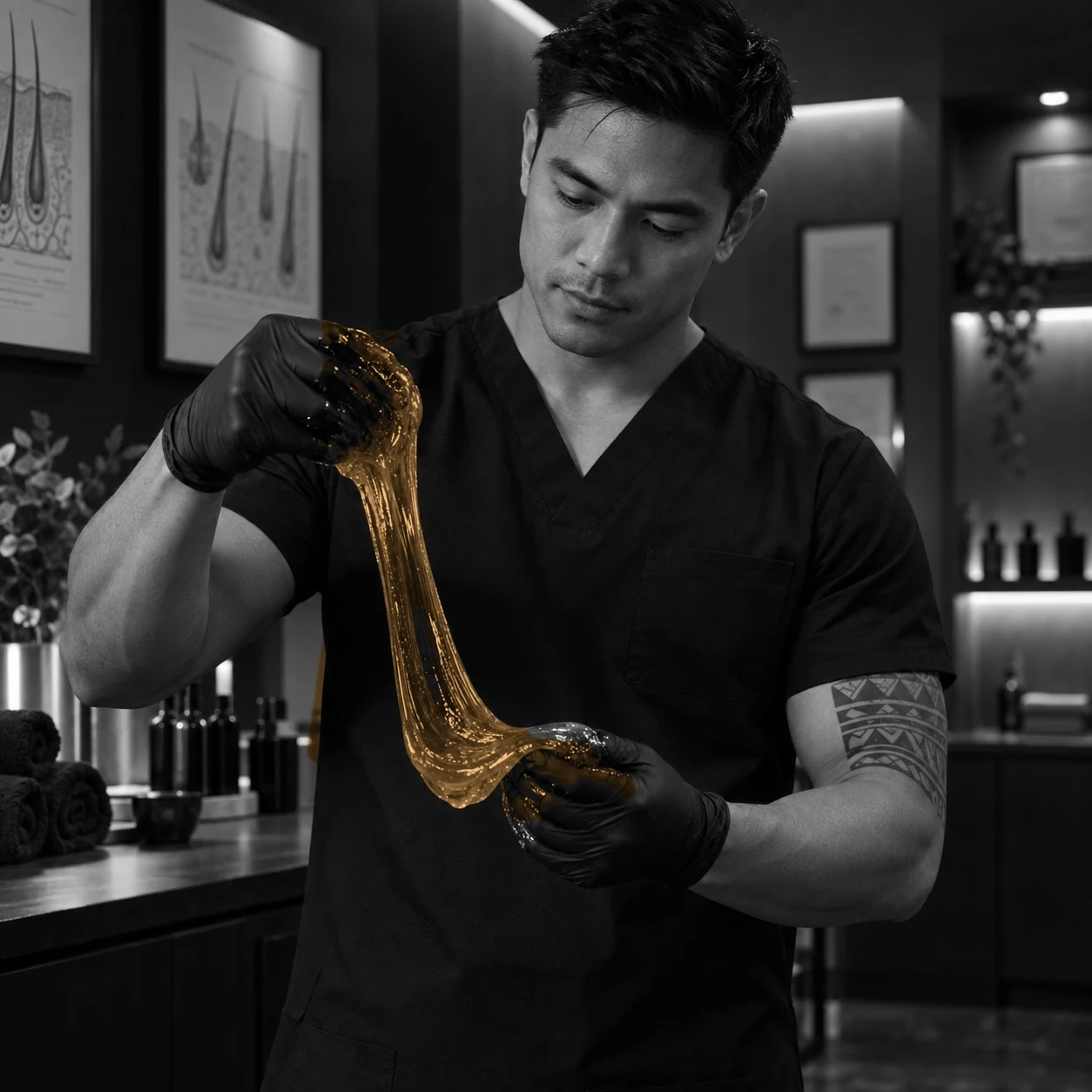
- Cool into a thick, taffy-like paste
That’s it. No resins, no synthetic additives. The result is a biodegradable, water-soluble product.
How Sugaring Differs from Waxing
Application & Removal
- Sugaring: Applied against hair growth, removed with the growth
- Waxing: Applied with hair growth, removed against it
Temperature
- Sugaring: Body temp to warm
- Waxing: Warm to hot
Adhesion
- Sugaring: Primarily grips hair
- Waxing: Grips both hair and skin
Cleanup
- Sugaring: Dissolves with water
- Waxing: Requires oil-based remover
Pain Factor: What It Actually Feels Like
Sugaring has a reputation for being “gentler.” That’s not the full story.
- On application: Can sting more because the paste is worked against the hair growth and repeatedly molded
- On removal: Often feels less sharp than strip wax because it’s removed with the growth
- Overall: Many people describe it as a more constant, dragging discomfort, rather than the quick snap of waxing
So while it’s marketed as less painful, the experience depends heavily on:
- Hair thickness
- Area being treated
- Technician skill
Why Estheticians Like Sugaring
From a business standpoint, it has clear advantages:
- Extremely low cost: Ingredients are cheap and widely available
- Minimal waste: One ball of paste can be used across multiple sections
- No strips or extras needed
- Easy cleanup: Water-soluble
That said, it’s more technique-dependent and slower to master than waxing.
The Hygiene Question: Reusing the Same Piece
This is where things get nuanced.
In traditional sugaring:
- The same ball of paste is used repeatedly
- It’s folded into itself after each pull
- Then reapplied to the next section
Is That Hygienic?
Technically:
- Sugar is not a hospitable environment for bacteria due to its low water activity
- The folding motion keeps bringing “clean” paste to the surface
However:
- It is still reused on the same client repeatedly
- It can contact skin cells, sweat, and micro-debris
- Cross-contamination risk exists if protocols aren’t strict
What Professional Standards Look Like
A hygienic approach should include:
- No double-dipping across clients. Ever.
- Discarding paste if contamination is visible
- Gloves at all times
- Clean work zones and controlled sections
Some clinics use single-use portions or switch paste more frequently for added safety, especially on sensitive areas.
Pros and Cons of Sugaring
Pros
- Natural ingredients
- Lower temperature reduces burn risk
- Water-soluble and easy cleanup
- Very low product cost
- Can be gentler on reactive skin in some cases
Cons
- Technique-heavy and inconsistent between providers
- Not necessarily less painful overall
- Slower than strip waxing
- Hygiene depends heavily on practitioner discipline
- Less effective on very short or coarse hair if technique is off
Bottom Line
Sugaring is not “better” than waxing. It’s different.
It trades speed and consistency for lower product cost and a more natural formulation. The experience can be more controlled, but not always more comfortable.
In the end, the outcome depends less on the method and more on who’s holding the spatula.
Related, if you are weighing up methods. the full method comparison on time, cost and results, the pain map, every area ranked, preparing for a wax treatment, body shaving and trimming as a service and wax versus laser for men.