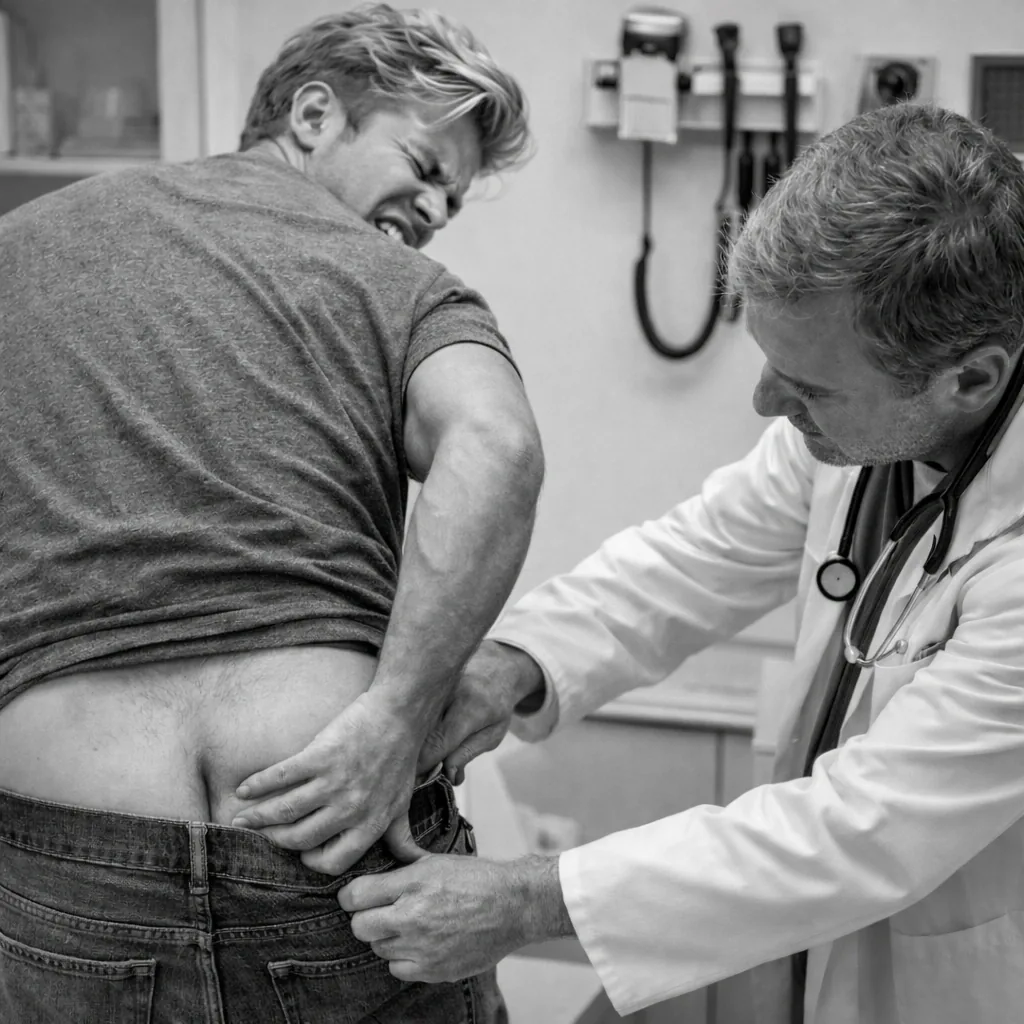
What Is a Fistula in the Buttocks Area
A fistula is an abnormal tunnel that forms between two areas of the body that should not be connected. When people refer to a “fistula in the buttocks,” they are most often describing an anal fistula, which connects the anal canal to an opening in the skin near the anus.
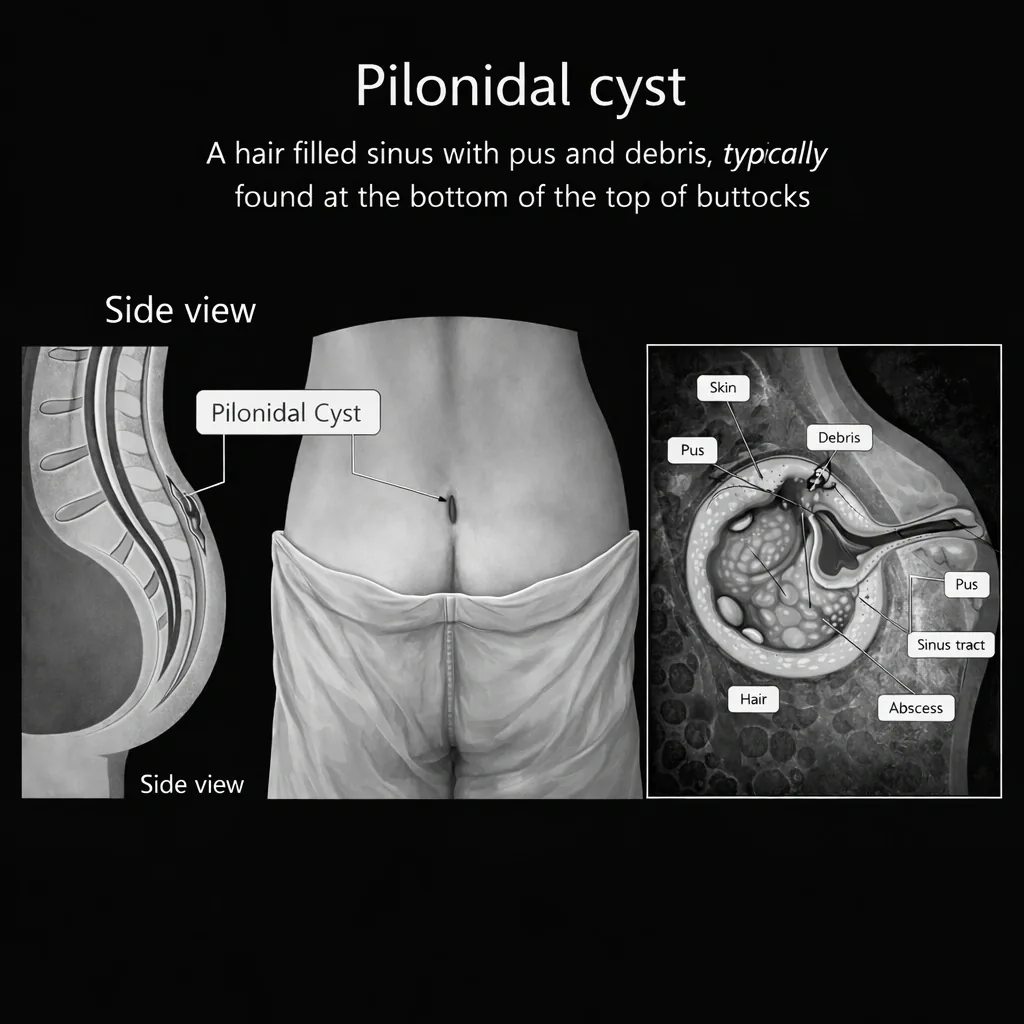
A related condition in the same region is pilonidal disease, which occurs higher in the buttock crease near the tailbone. While different conditions, both can cause chronic drainage, pain, and recurring infection.
Common Causes
Anal Fistula
Most anal fistulas begin as an anal abscess. When an infected gland near the anus fills with pus and drains incompletely, a tunnel can remain.
Common causes and risk factors include:
- Recurrent or untreated anal abscesses
- Chronic infection
- Inflammatory bowel disease such as Crohn’s
- Trauma or prior surgery
Pilonidal Disease
Pilonidal disease is strongly associated with:
- Dense or coarse hair
- Friction and pressure
- Prolonged sitting
- Hair and debris trapped in the buttock crease
Hair plays a much larger role in pilonidal disease than in anal fistulas.
Symptoms to Watch For
Symptoms vary but commonly include:
- Persistent pain or tenderness near the anus or buttocks
- Swelling or a lump
- Ongoing drainage of pus or blood
- Skin irritation or redness
- Recurrent “boils” or abscesses
- Fever or fatigue if infection is present
Symptoms that repeatedly return rarely resolve without treatment.
Diagnosis
Diagnosis usually involves:
- Physical examination
- Identification of external openings
- Imaging such as ultrasound or MRI to trace the tract
Proper diagnosis is essential, as treatment differs significantly between fistulas and pilonidal disease.
Treatment Options
Anal Fistulas
Most anal fistulas require surgical management. Treatment may include:
- Fistulotomy
- Seton placement
- Advanced closure techniques
Medication alone is rarely sufficient.
Pilonidal Disease
Treatment ranges from:
- Drainage of infection
- Surgical removal of chronic sinus tracts
- Ongoing management to prevent recurrence
The Role of Hair and Hair Removal
How Hair Contributes
Hair can trap bacteria, moisture, and debris in deep skin folds, increasing irritation and infection risk, especially in pilonidal disease.
Why the Gluteal Cleft Specifically
The buttock crease is a genuinely different anatomical problem rather than simply an awkward area. Five things happen there at once:
- Coarse hair, which is usually thicker there than almost anywhere else on the body
- A deep occlusive fold that holds everything against the skin
- Constant friction and shear from sitting
- Moisture that does not clear
- Loose shed hairs from elsewhere on the body collecting in it, which is the detail most people have never heard
That combination is the recognised mechanism of pilonidal disease. DermNet describes friction and motion injuring the follicles so that hairs penetrate the surrounding skin and provoke a foreign body reaction. It is two to three times more common in men, peaks between the ages of twenty and forty, and is worse with coarse curly hair and prolonged sitting.
The Evidence for Laser After Pilonidal Surgery
If you have already had pilonidal surgery, this is the part of hair removal with real published evidence behind it.
A 2024 systematic review and meta-analysis of three randomised controlled trials, published in Cureus, found that laser hair epilation reduced recurrence with an odds ratio of 0.319 (95% CI 0.160 to 0.636, p = 0.0001), which works out to roughly 68 per cent lower odds of the disease coming back.
Read that carefully, since it is narrower than the internet will tell you. It shows that in people who have already had pilonidal surgery, laser substantially reduces recurrence. It does not show that laser prevents pilonidal disease in people who have never had it. Three trials is a small evidence base, and the size of the effect may not be uniform across every patient.
Honest framing matters here. Hair removal in this situation is a recurrence-reduction measure recommended alongside surgical care, not a substitute for it.
Hair Removal Methods
- Shaving: Temporary and often irritating. Can worsen ingrowns and inflammation.
- Laser Hair Reduction: Reduces hair density over time and has meta-analysis support for lowering recurrence after pilonidal surgery.
- Electrolysis: Permanently removes individual follicles and may help prevent repeated hair related irritation in high risk areas.
Hair removal does not treat or close a fistula. It only supports hygiene and reduces contributing factors, mainly in pilonidal disease.
A Note on Settings in This Area
The skin of the gluteal cleft and the perianal region is typically darker than the skin of the thigh or abdomen on the same person, and friction related darkening is extremely common on top of that. A laser cannot tell the difference between the melanin in a hair and the melanin in skin, so a setting that is perfectly correct on a pale abdomen can injure the same person a short distance away. There is more on this in laser hair removal on dark skin and the Fitzpatrick scale.
Final Thoughts
Fistulas near the buttocks are not cosmetic issues. They are medical conditions that often require imaging, specialist evaluation, and sometimes surgery. Hair removal can play a supportive role in reducing irritation or recurrence in hair driven conditions, but it is not a treatment for a fistula itself.
If you suspect a fistula, have persistent drainage, pain, swelling, or repeated infections, you should always see your dermatologist or an appropriate medical specialist for diagnosis and treatment.
If this is your situation, these go together. acne, folliculitis and hair removal, hidradenitis suppurativa and hair removal, folliculitis and hair removal, how often you should actually exfoliate and what a BROzilian involves.