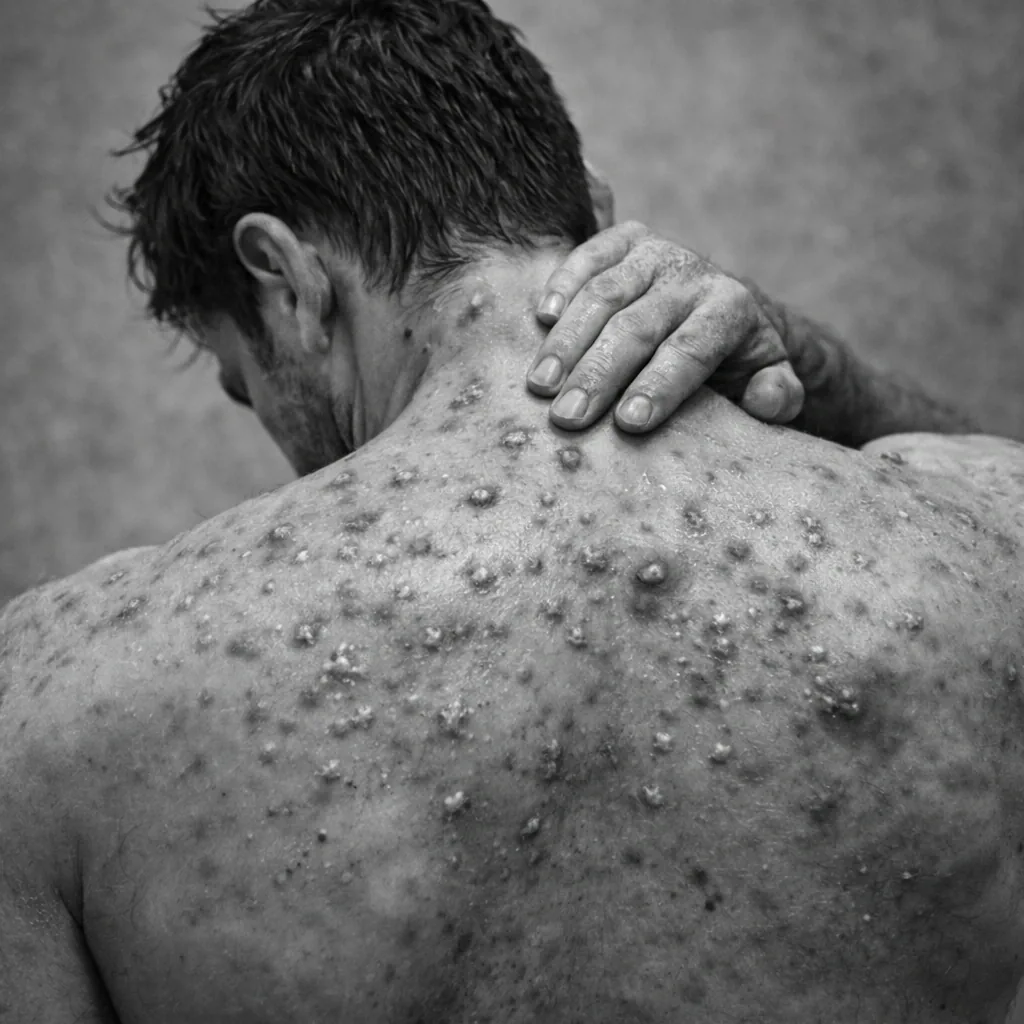
What Is Folliculitis
Folliculitis occurs when a hair follicle becomes inflamed or infected. It often appears as small red bumps, white headed pimples, or tender spots that resemble acne.
It helps to split the triggers into two groups, because they are treated differently.
Infectious: bacteria, or the yeast Malassezia.
Mechanical: friction from clothing, sweat and heat, shaving or hair removal trauma, and curly or coarse hair that curves back into the skin.
That last one has its own name, pseudofolliculitis barbae, and it is not an infection at all. It is the skin reacting to a hair as a foreign body. The two can look identical and can overlap on the same face. Hair removal changes the mechanical group. It does not treat the infectious group.
One trap is worth naming. Malassezia folliculitis, caused by a yeast rather than a bacterium, looks almost exactly like acne and like bacterial folliculitis. Chalupczak and Lipner, writing in the Journal of Fungi in 2025, describe it as an underdiagnosed mimicker that frequently leads to inappropriate antibiotic use, and note it responds to antifungal treatment instead. If itchy, uniform bumps are not clearing on antibiotics, ask a dermatologist about a potassium hydroxide test. No hair removal method will fix a yeast problem.
It can occur anywhere hair grows, but is especially common on the face, neck, groin, buttocks, thighs, and underarms.
Why Hair Removal Can Trigger Folliculitis
Hair removal disrupts the follicle. When the hair shaft is cut, pulled, or broken unevenly, it can irritate the follicle opening or curl back into the skin.
This creates:
- Inflammation
- Micro tears
- Bacterial entry points
Not all hair removal methods affect follicles the same way.
Shaving and Folliculitis
Shaving is one of the most common triggers.
Why it causes problems:
- Cuts hair at an angle, increasing ingrowns
- Creates sharp edges that pierce skin
- Causes repeated friction
Frequent shaving in areas with coarse or curly hair significantly increases folliculitis risk.
Waxing and Folliculitis
Waxing removes hair from the root, which can be helpful in some cases, but it also creates trauma.
Pros:
- No sharp regrowth initially
- Slower hair return
Cons:
- Inflamed follicles are more susceptible to infection
- Sweat and friction after waxing can worsen symptoms
- Not ideal for active folliculitis
Waxing irritated or infected follicles often makes the condition worse.
Laser Hair Removal and Folliculitis
Laser reduces hair density over time.
How laser helps:
- Less hair means fewer inflamed follicles
- Reduced shaving frequency
- Thinner regrowth
Limitations:
- Does not eliminate all follicles
- Ineffective on very light or grey hair
- Temporary shedding phase may briefly flare symptoms
For the mechanical kind, the evidence is reasonably good. Kravitz and colleagues, writing in Military Medicine in 2026, followed up 50 service members treated for pseudofolliculitis barbae with four to six sessions of Nd:YAG or alexandrite laser hair removal, and 88 per cent were satisfied with the result. That was a phone survey of one military group treated on the beard, not a randomized trial, so read it as encouraging rather than settled. Laser can improve folliculitis for many people, and it is not a guaranteed cure.
Electrolysis and Folliculitis
Electrolysis is the one method that can permanently remove a hair, and the permanence belongs to the completed course rather than to any single insertion. A follicle that is not fully destroyed the first time grows back finer and gets treated again, which is exactly why a course runs over months rather than weeks.
Why it can help:
- Removes the follicle entirely
- Eliminates the hair that triggers inflammation
- Effective on all hair types and colors
Considerations:
- Requires multiple sessions
- Active infection should be treated before starting
- Skilled technique is essential to avoid irritation
For chronic, hair driven folliculitis, electrolysis is the only method that removes the source permanently.
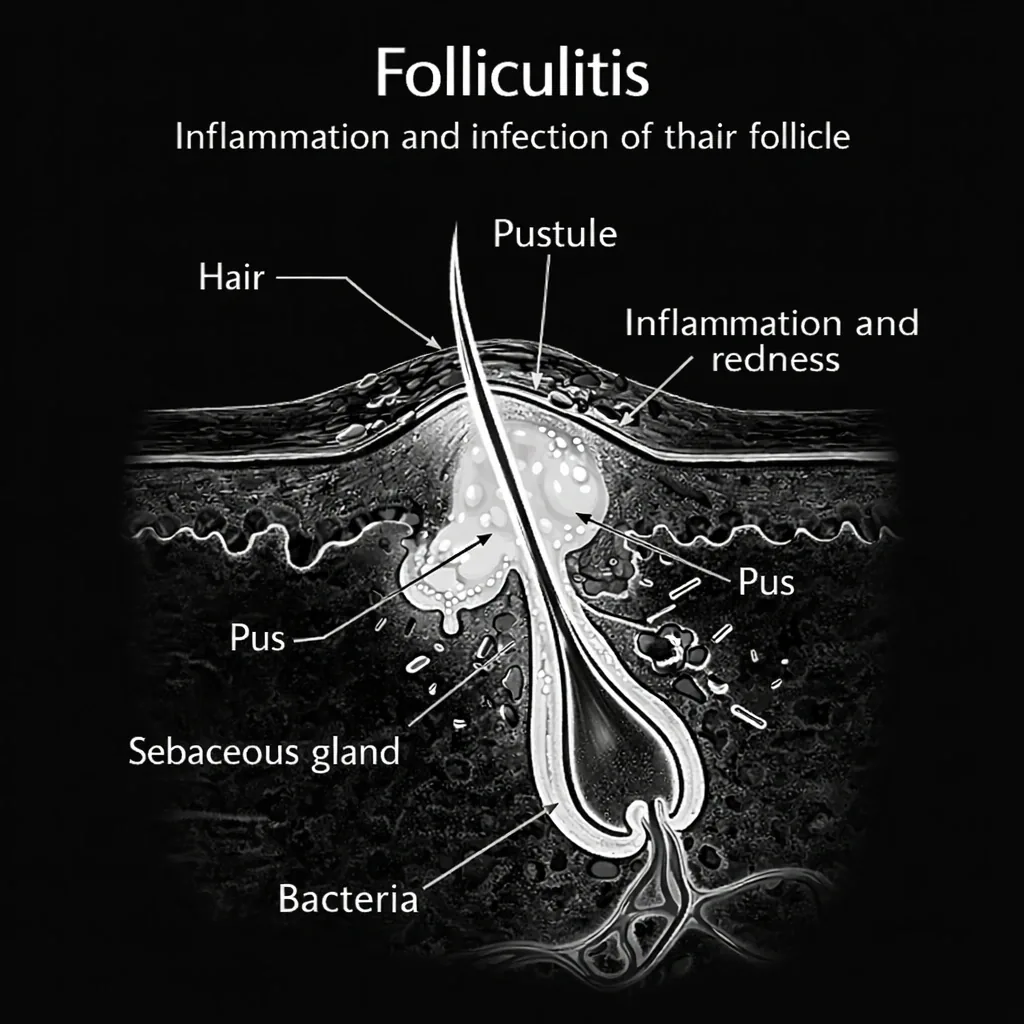
Hot Tub Folliculitis
One version has nothing to do with hair removal. Pseudomonas aeruginosa folliculitis, usually called hot tub folliculitis, comes from poorly disinfected hot tubs, pools and steam rooms. Kutlu and colleagues, in a 2025 review in the Sisli Etfal Hastanesi Tip Bulteni, describe it as the best known of the waterborne skin infections. It shows up a day or two after the water, often as itchy bumps under where a swimsuit sat, and in a healthy person it usually settles on its own within about a week or two. If you have been in a hot tub recently, tell me, and tell your doctor. Changing your shaving routine will not touch it.
When Hair Removal Makes Folliculitis Worse
Hair removal should be paused when:
- There is active infection
- Skin is broken, oozing, or painful
- Pustules or crusting are present
Treating inflamed skin aggressively often prolongs healing.
Supporting Skin While Treating Folliculitis
Regardless of method:
- Keep skin clean and dry
- Avoid tight clothing on affected areas
- Shower after sweating
- Do not pick or squeeze lesions
- Follow professional aftercare guidance
Hair removal works best on calm, healthy skin.
Final Thoughts
Folliculitis is not just a cosmetic issue. It is a medical skin condition that can be aggravated or improved depending on how hair is managed.
Shaving often worsens it.
Waxing can aggravate it.
Laser may reduce it.
Electrolysis can eliminate the trigger entirely.
However, not all folliculitis is caused by hair alone.
Persistent, painful, spreading, or recurrent folliculitis should always be evaluated by a dermatologist to rule out infection, fungal involvement, or underlying skin conditions before continuing hair removal treatments.
Correct diagnosis leads to the right solution.
If this is your situation, these go together. hidradenitis suppurativa and hair removal, acne, folliculitis and hair removal, the diabetes and hair removal guide, how to prepare, by method and what I look at before I treat anything.