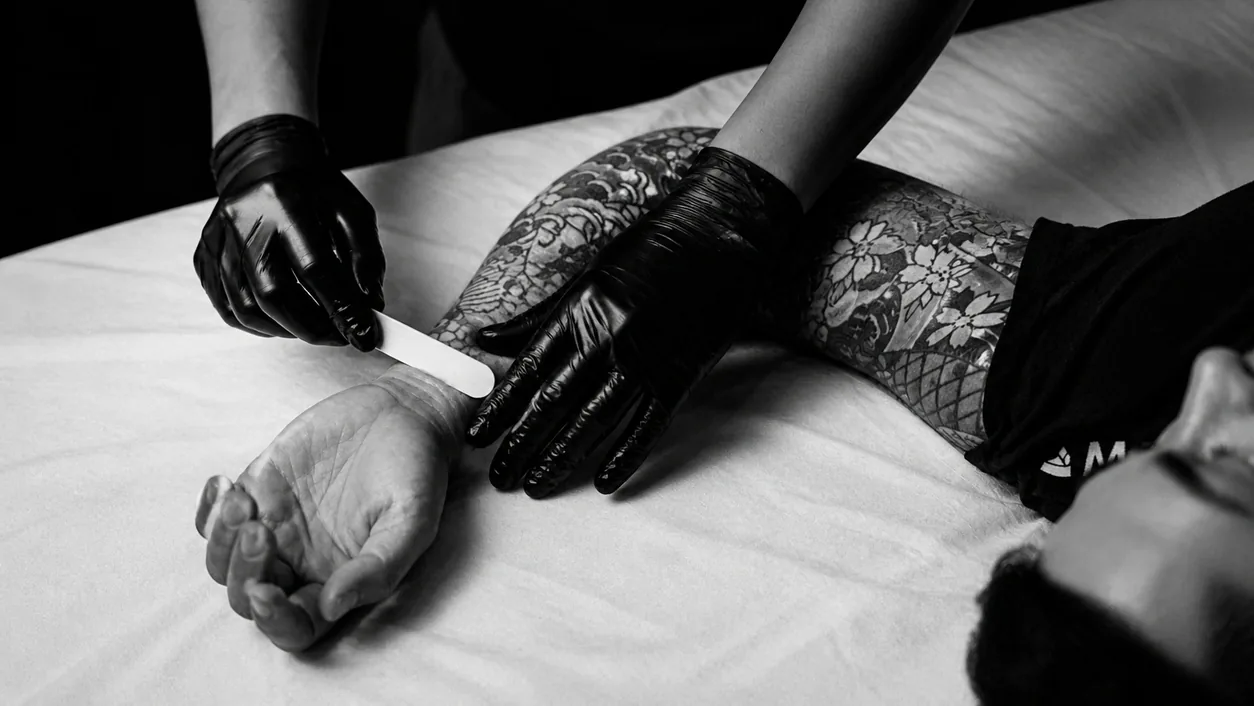
Walk into any professional waxing room and you’ll find two workhorses doing very different jobs: hard wax and cream (strip) wax. They’re not interchangeable. Each has a specific role, ideal temperature, and set of trade-offs. Get this right and treatments are faster, cleaner, and far more comfortable.
Everything in the pros and cons below is what years of doing this have taught me about how these waxes behave. I have not found controlled trials comparing hard and cream wax on comfort, lifting or short-hair pickup, so take those lists as my experience rather than as evidence.
What Is Hard Wax?
Hard wax is applied warm, allowed to set, then removed without a strip. It grips the hair firmly while adhering less aggressively to the skin.
Ideal Temperature
In my pot, hard wax works at roughly 50 to 60 degrees Celsius, which is 122 to 140 Fahrenheit, thick and honey-like, spreading smoothly without running. That is my working figure and my brands' label guidance rather than a published standard, and I have not found a study that sets one. The injury side does have published numbers. Moritz and Henriques showed in 1947 that skin damage depends on temperature and contact time together, with 44 degrees Celsius the lowest temperature that can cause it at all and the time to injury shrinking fast above that. Hard wax leaves the pot above that line, which is why it gets a tested patch first every single time.
Best Uses
- Brozilian and bikini
- Underarms
- Face (upper lip, brows, chin)
- Coarse or dense hair
- Sensitive skin
Pros
- More comfortable on sensitive areas
- Lower risk of skin lifting when used correctly
- Grabs short, coarse hair well
- No strips needed, cleaner workflow in tight areas
Cons
- Slower application (set time required)
- Higher product cost per service
- Not efficient for large areas
- Technique-sensitive: thickness and timing matter
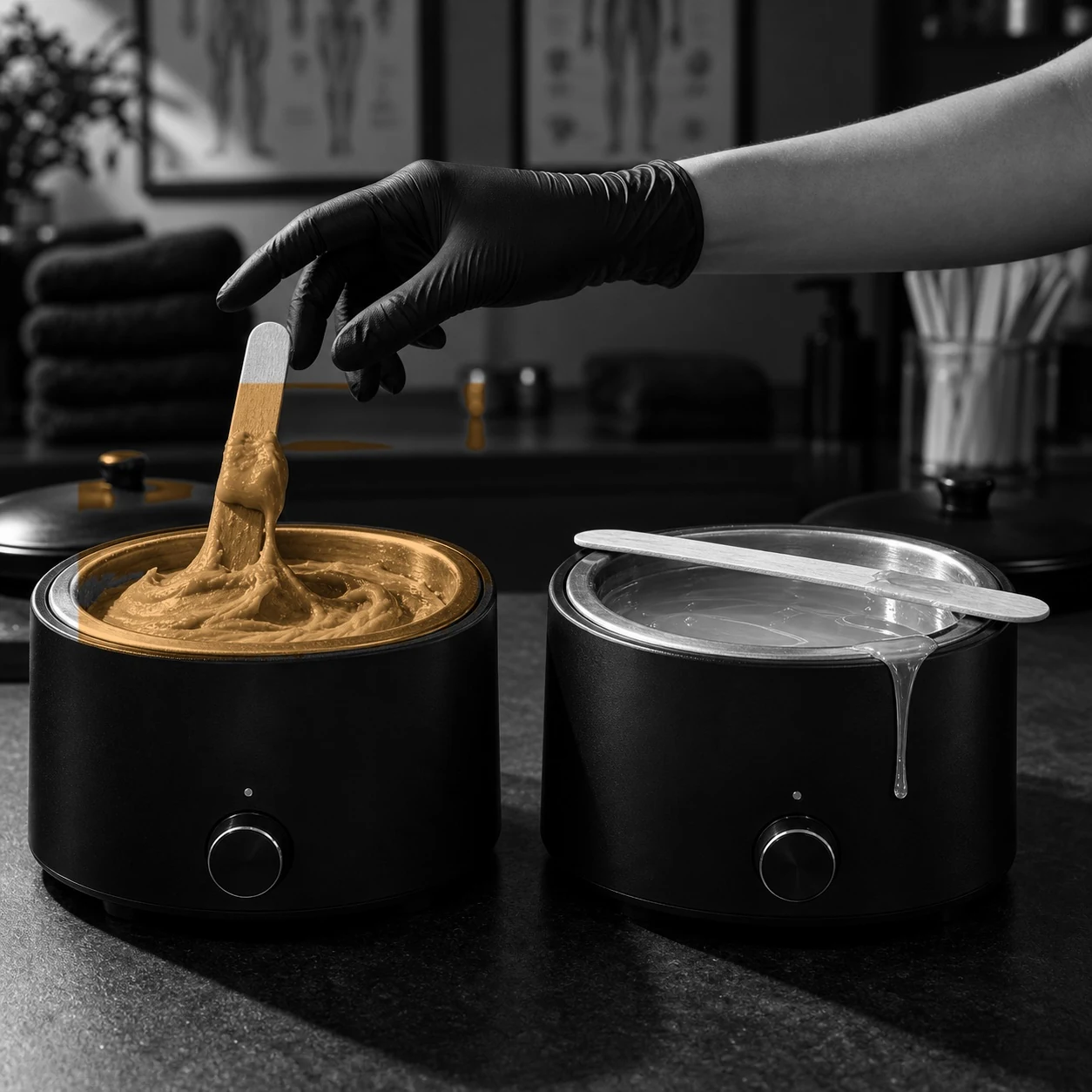
What Is Cream (Strip) Wax?
Cream wax is applied in a thin layer and removed with a cloth or paper strip. It adheres to both hair and skin, which is why technique and prep are critical.
Ideal Temperature
Cream wax runs cooler, around 37 to 45 degrees Celsius, which is 98 to 113 Fahrenheit in my pot, thin and spreadable like warm lotion. Read the bottom of that as a floor rather than a target, since 37 degrees is body temperature and wax that cool drags instead of spreading. These are my working figures and my brands' label guidance, not a published standard.
Best Uses
- Legs
- Arms
- Back and chest
- Large surface areas with finer or moderate hair
Pros
- Fast and efficient for big areas
- Lower product cost per service
- Thin application means less buildup
- Consistent results with proper tension technique
Cons
- Can be more uncomfortable on sensitive zones
- Higher chance of irritation if skin prep is poor
- Requires strips and more cleanup
- Less forgiving on very coarse or short hair
Choosing the Right Wax (Real-World Logic)
Think in zones:
- Small + sensitive + coarse → Hard wax
- Large + less sensitive + finer → Cream wax
A skilled practitioner often uses both in the same appointment. For example:
- Brozilian: hard wax
- Full legs add-on: cream wax
That mix balances comfort and efficiency.
Temperature Matters More Than People Think
Too hot burns, too cool fails to grip, and the sweet spot is about control and consistency rather than a number on a dial. The burn half has a real number behind it. Moritz and Henriques established in 1947 that 44 degrees Celsius is the lowest skin surface temperature that can cause injury at all, and that above it the time needed to do damage drops away quickly. Every wax in this room is above that threshold when it leaves the pot, which is the whole reason a patch test is not optional.
- Hard wax too hot: runny, messy, higher burn risk
- Hard wax too cool: cracks, poor pickup
- Cream wax too hot: overly fluid, thin adhesion, more irritation
- Cream wax too cool: drags, uneven spread
A professional adjusts temperature throughout the day based on room conditions, pot load, and brand behavior.
Bottom Line
Hard wax is your precision tool. Cream wax is your speed tool.
Use each where it excels, not where it merely works.
Related, if you are weighing up methods. what sugaring is and how it works, the pain map, every area ranked, body shaving and trimming as a service, wax versus laser for men and how to prepare, by method.