The Smallest Tool in the Room
An electrolysis probe is a few hundredths of a millimetre of polished metal, and it decides two things that matter to you.
How comfortable the session is, and how well each hair is actually treated.
Everything else in the room is adjustable. The probe is the part that touches you.
It Is Not a Needle
This is the first thing to clear up, since the word gets used loosely and it puts people off before they start.
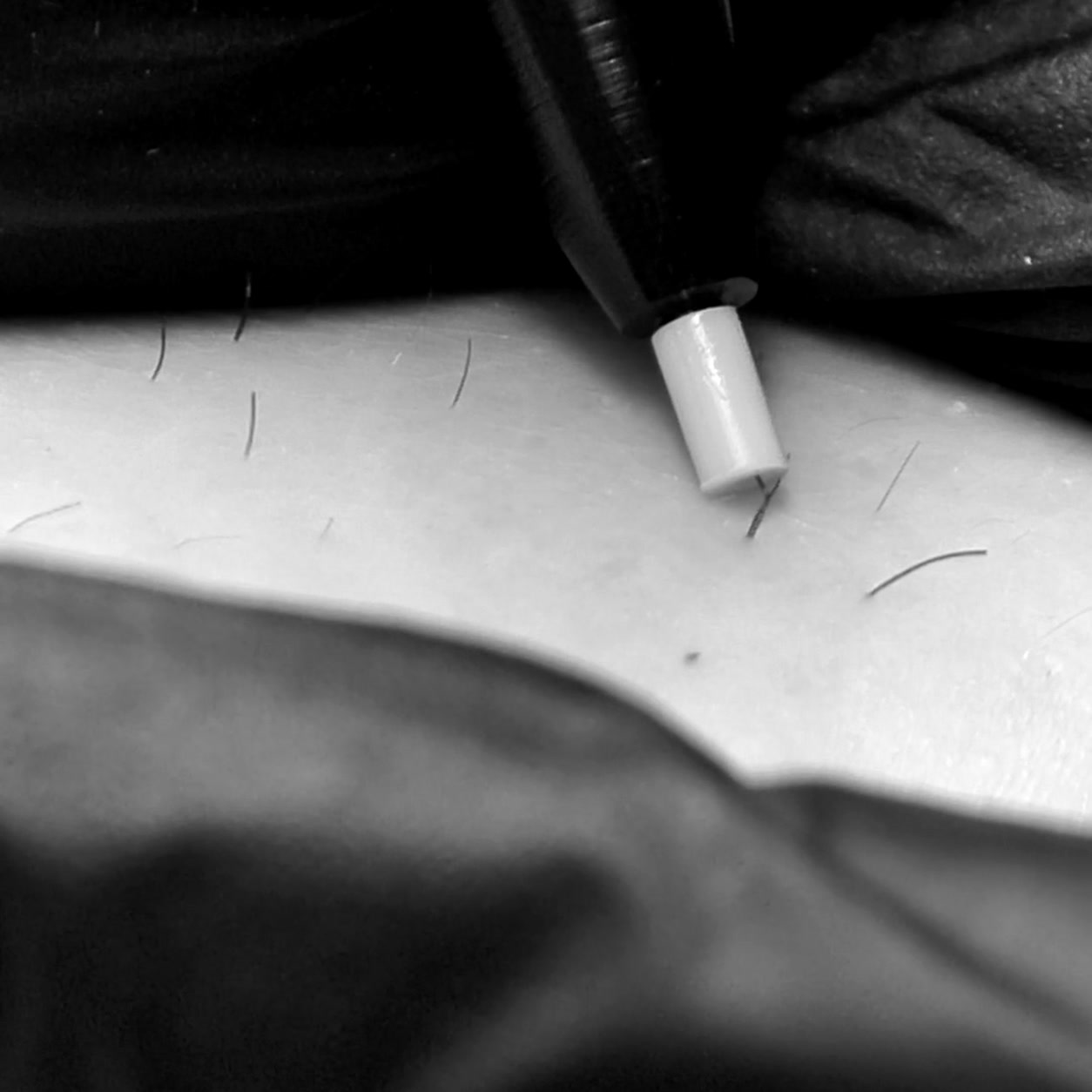
A probe does not pierce the skin. It slides into the natural opening of the follicle, alongside the hair that is already there, and delivers energy to the base. The follicle is a hole that already exists.
A probe has four parts worth knowing:
- the shank, which is the end that clips into the holder
- the taper, where it narrows
- the shaft, the working length that sits in the follicle
- the tip, which delivers the energy
One Piece or Two
Probes come built two ways, and the difference is control against forgiveness.
- one-piece: rigid and tapered, with precise control on coarse, deep hair
- two-piece: a flexible shaft and a rounded tip, so if the angle is slightly off it bends rather than pushing through the follicle wall
Neither is better. They answer different problems, and a practitioner should be choosing between them rather than using whatever is in the drawer.
Size Is the Part That Matters Most
Hair probes are measured in thousandths of an inch, which is a charmingly old-fashioned way to describe something this small.
The usual working range:
- 002, about 0.055 mm, for fine facial hair
- 003, about 0.075 mm
- 004, about 0.1 mm
- 005, about 0.125 mm
- 006, about 0.15 mm, for a coarse beard
For scale, a human hair runs roughly 0.05 to 0.15 mm across. The probe is meant to sit in that same range, matched to the hair in front of it.
A 3 Is Not Always a 3
Here is the part almost nobody outside the trade knows.
Each manufacturer numbers its own way. Ballet runs 2 to 6. Dectro's Pro-Tec line runs 1 to 5. The number on the pack is a product code, not an industry standard, so two practitioners can both say "I use a 3" and be using different things.
MY TWO CENTS
This is why I size to the hair in front of me rather than to a number. If anyone tells you they use one size for everything, they are telling you they are not looking closely. Hair on a jawline and hair on a chest are not the same job.
What I Actually Buy
Having just told you that brand numbering is inconsistent, it is only fair to say what is in my own drawer.
I buy Dectro and Ballet, in both insulated and non-insulated.
Two things follow from that:
- the numbering difference above is a live consideration in my room rather than a theoretical one, since I work across both ranges
- insulated and non-insulated are both on hand, so the choice gets made for your skin rather than for whatever happens to be in stock
Size gets chosen at the appointment, against the hair in front of me.
Why the Wrong Size Feels Hotter
This is the practical consequence, and it is the reason size is worth caring about as a client.
A probe that is too small for the follicle concentrates the current into a narrower path. More concentrated energy in one spot feels sharper and hotter. A properly matched probe spreads that same energy through the follicle, which is where it is supposed to go.
Comfort is not just a setting on the machine. Half of it is choosing the right probe before anything is switched on.
More on how the sensation actually compares in does hair removal hurt.
Insulated Probes
An insulated probe carries a coating along the shaft that is thinner than a micron, which leaves only the tip live.
The energy goes where it is aimed, at the base of the follicle, rather than along the whole length of the shaft toward the surface. For skin that reacts easily, that is a meaningful difference.
Steel or Gold
Two materials, one straightforward decision.
- medical-grade stainless steel suits most hair and most skin
- gold-plated probes are nickel-free, which is the reason to pick them
If you react to cheap jewellery, watch backs or belt buckles, say so before your first appointment. Nickel sensitivity is common, and it is easily worked around when somebody knows about it in advance rather than halfway through a session.
Bent on Purpose, Never by Accident
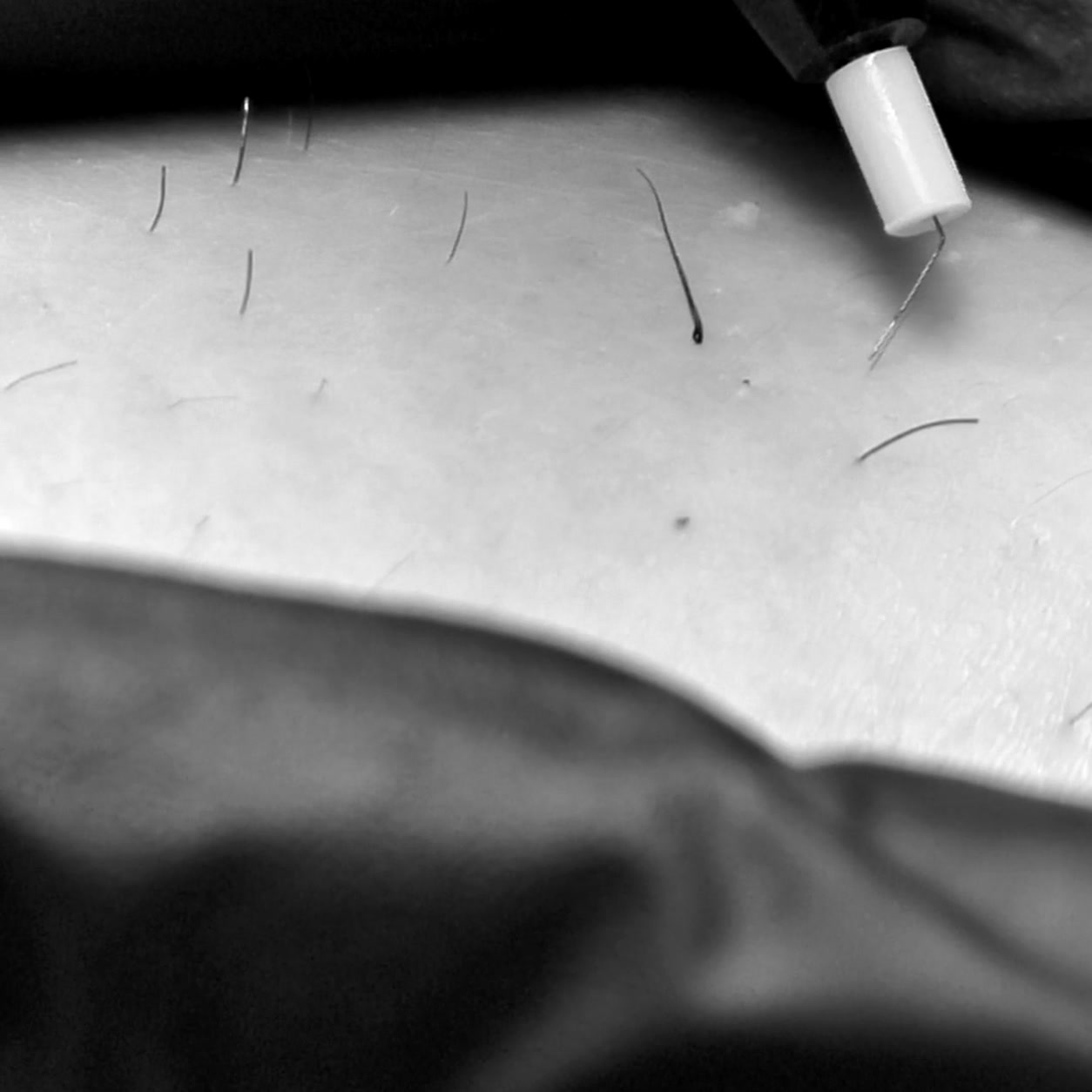
A slight bend at the base is a deliberate technique for reaching hair that grows at a shallow angle.
A probe that kinks by accident is a different story. It goes off course, and the bend can crack the insulation, which defeats the point of having insulation at all. A kinked probe gets replaced. It never gets straightened and carried on with.
One Probe, One Client, Once
Every probe arrives individually sterile-sealed. It is opened in front of you, used on you only, and goes straight into the sharps container at the end.
Worth remembering how recent that is. Electrolysis began in 1875, when Charles Michel published the first clinical report of removing an ingrown eyelash with a battery-powered needle. For a long stretch of that history, needles were reused and resterilised. Single-use sterile packaging is the modern part of a very old treatment.
MY TWO CENTS
If you ever cannot see the packet being opened, ask. It is a fair question and nobody doing this properly will mind being asked it.
Bottom Line
The probe is the smallest thing in the room and the one with the most influence on your session.
Matched to the hair rather than to a habit, insulated or not depending on your skin, bent deliberately or replaced, and opened fresh in front of you every time. I buy Dectro and Ballet, in both insulated and non-insulated, and choose between them at the appointment.
If nickel is an issue for you, flag it before your first visit rather than during it.
For the bigger picture, start with what electrolysis actually is, then the three methods and the machine.