This Is Not a Rare Conversation
Diabetes Canada puts diagnosed type 1 and type 2 at roughly four million Canadians, about ten percent of us. Add prediabetes and the number is 11.9 million, close to thirty percent of the population. Counting undiagnosed type 2, diabetes alone reaches about fifteen percent.
So on any given week I am working on people who have it, including some who do not know yet.
Here is the short version before the long one. Diabetes very rarely stops hair removal. What it does is narrow the margins, in three specific ways, and it changes how carefully I work rather than whether I work.
The Three Things That Are Actually Different
Healing runs longer and finishes weaker. The inflammatory phase of wound healing extends past where it should and does not switch off cleanly, so skin stays irritated longer. Collagen synthesis drops and the collagen laid down has lower tensile strength, which means weaker scars. New blood vessel formation is impaired, since the signals that encourage it are reduced while the signals that suppress it are raised.
Infection is more likely, for reasons beyond the sugar. Reduced oxygen delivery slows white blood cells reaching the site. Diabetes raises infection risk through several routes in addition to blood glucose itself.
Sensation may be unreliable, and you may not know. This is the one that matters most in a treatment room, and it deserves its own section.
None of that makes any of this unsafe. It means that when something small goes wrong, it has further to travel before it stops, so avoiding the small thing matters more here than it does elsewhere.
The Nerve Question
Diabetic peripheral neuropathy is present in ten to twenty percent of people at the moment of diagnosis. It rises to 26 percent at five years and 41 percent at ten, and somewhere between half and two thirds of people with diabetes develop it at some point.
Two facts about it matter enormously here.
The first is that it can be silent. It has a recognised asymptomatic stage, and loss of protective sensation, the point at which a standard 10 gram monofilament pressed against the skin can no longer be felt, tends to arrive late in the process, sometimes only after damage has already happened. Feeling fine is not evidence that sensation is intact.
The second is what it means for what I do. Laser puts heat into skin. Electrolysis places a controlled thermal injury at the base of a follicle. Waxing lifts the top layer off. Every one of those quietly depends on you being able to tell me when it is too much.
If that signal is degraded, the safety system is degraded with it. That is why I ask, and why the answer changes how I work rather than whether I work.
The Circulation Question, and a Sign You Might Already Have Noticed
Nerves get the attention. Blood supply matters just as much and gets discussed far less.
Peripheral arterial disease narrows the arteries feeding the legs and feet, and diabetes is one of its main risk factors. Less blood arriving means less oxygen, fewer immune cells and slower repair, in exactly the tissue most likely to be treated and least likely to be watched.
The reason it belongs in a hair removal article is that one of its signs is hair loss on the legs. Alongside that: skin that has gone smooth and shiny, skin that feels cool, weak or absent pulses in the feet, numbness in the toes, and sores that do not heal.
And the detail that makes this worth writing down: up to four in ten people with peripheral arterial disease have no leg pain at all.
So if the hair on your lower legs has been thinning or disappearing on its own, without any treatment, that is not necessarily good news and it is worth mentioning to your doctor. I am not able to tell you what is causing it. I am able to tell you it is a thing that has a meaning and that somebody should look at it.
Feet Are a Conversation, Not a Booking
Diabetes Canada's clinical practice guideline on foot care is direct about why this area is different.
Loss of sensation to the monofilament at the sole of the foot is described there as a significant and independent predictor of future foot ulceration and lower limb amputation. The guideline recommends foot examination at least annually and more often in higher risk people, counselling to avoid foot trauma, and prompt treatment of any sign of infection even in the absence of pain.
That last phrase is the entire problem in five words. Pain is the alarm system, and the alarm may be disconnected.
So if you have diabetes and you want hair removed from your feet or toes, I am going to want to talk about it before it goes in the calendar. Depending on what you tell me about sensation, circulation and how you heal, I may ask you to check with your doctor or a chiropodist first. That is not me being awkward. It is the one part of the body where a small injury has a genuinely different set of consequences.
Lower legs are a different matter and I treat them. More carefully, at lower settings, with closer checks between sessions and a slower overall course.
What I Need to Know, and Why
None of this is nosy and none of it goes anywhere. Six things:
- type 1 or type 2, and roughly how long you have had it
- whether your control is generally steady, and your most recent A1C if you know it
- any numbness, tingling, burning or reduced feeling anywhere, particularly feet and lower legs
- any sore, ulcer or infection on your legs or feet that took a long time to close
- whether you inject, and where
- any other condition or medication that affects healing, circulation or immunity
I am not treating any of that and I am not interpreting it. Asking whether you know your A1C is intake. Having an opinion about the number is not my job, and I do not have one.
On the injection question specifically. Repeated injection into the same spot produces lipohypertrophy, lumps of thickened fatty and scar tissue that feel firmer or rubbery than the skin around them, and which often have reduced sensation over the top. It is not unusual: reported in up to 64 percent of people who inject at some point. The usual sites are the abdomen and the thighs, which are also areas people book.
Show me where you inject and I will work around it. Treating over tissue that is already thickened, already scarred and already less sensitive is a bad idea in three separate ways at once.
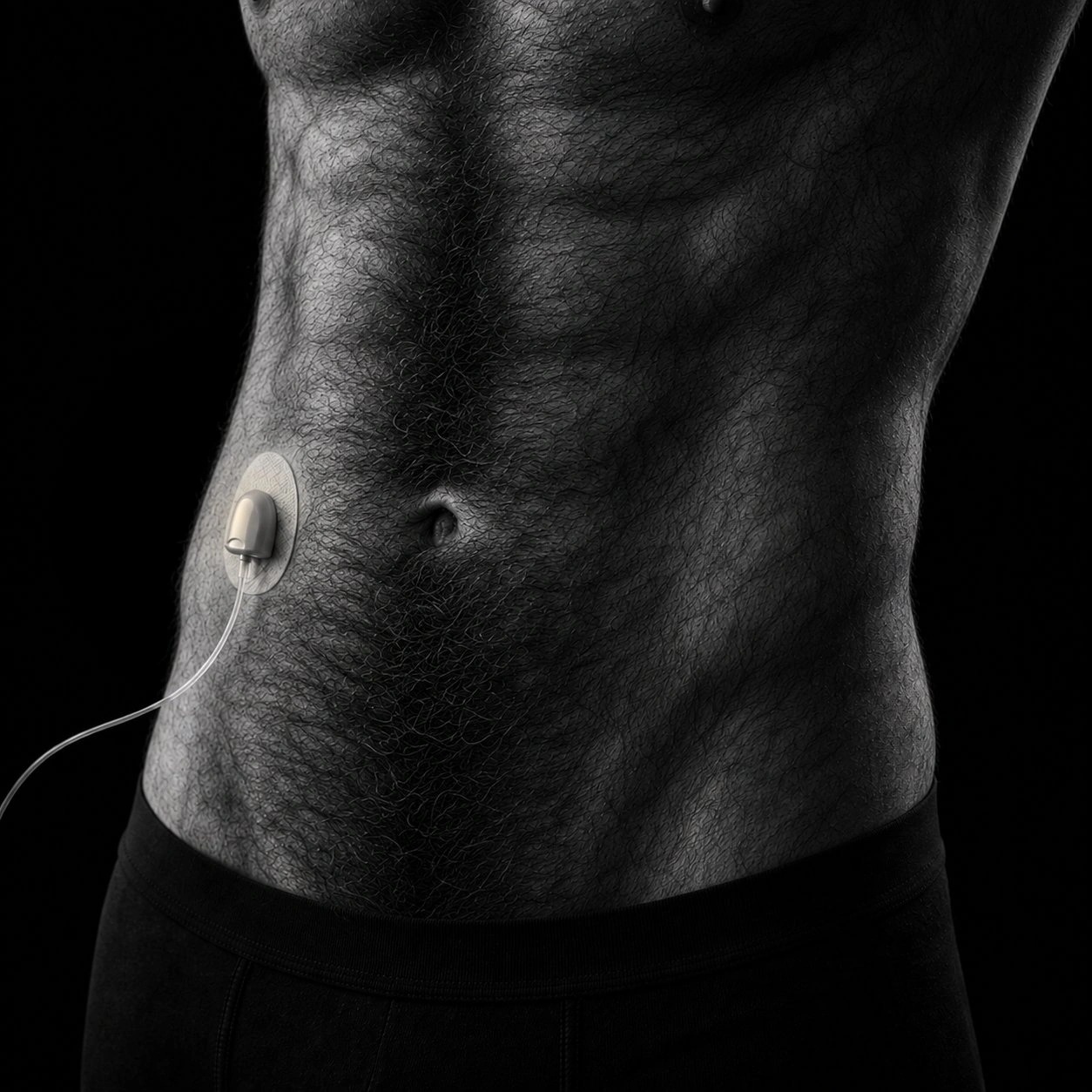
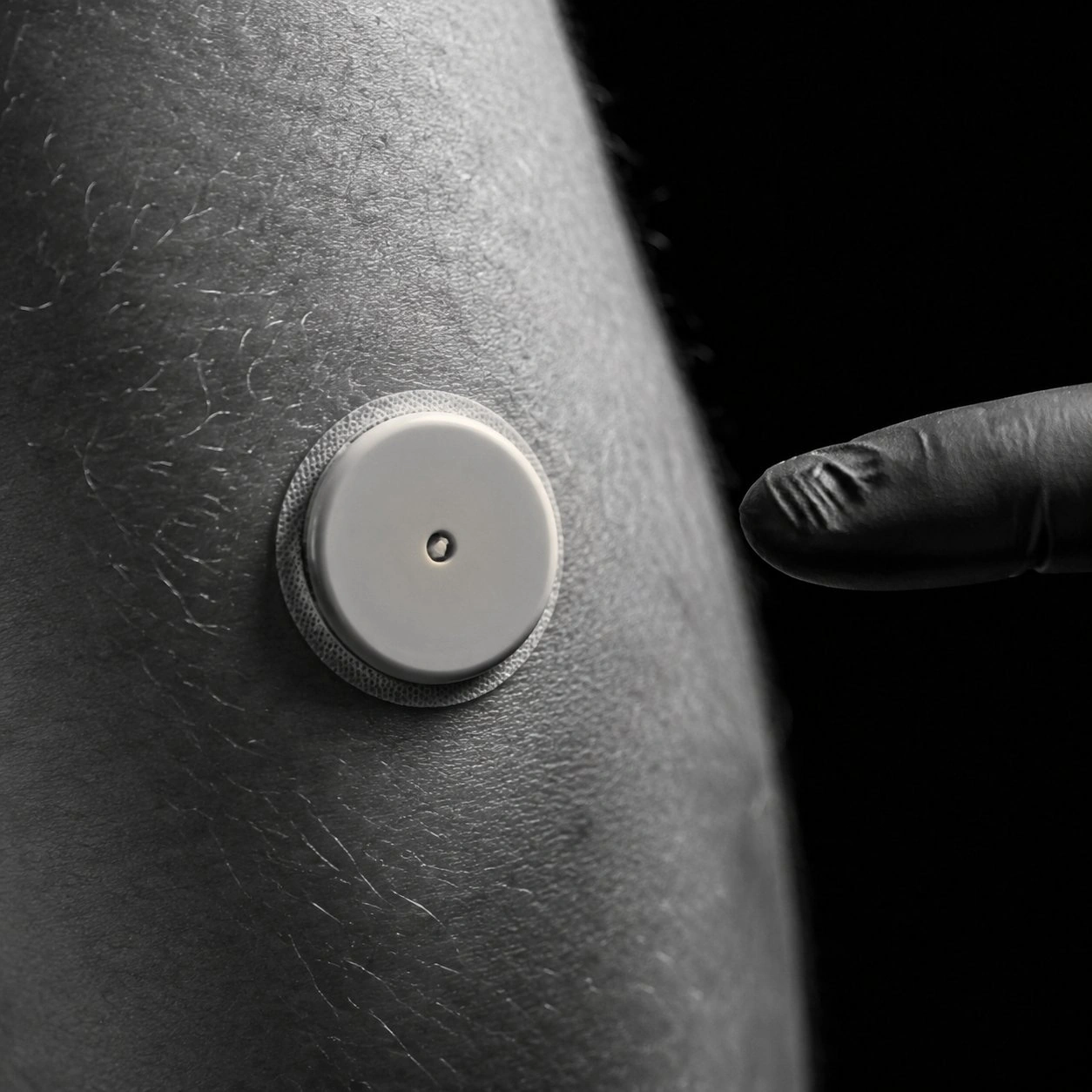
The same goes for a continuous glucose monitor or an insulin pump site. A sensor on the back of the arm and a cannula on the abdomen are both sitting in areas people book, and both have adhesive holding them to skin I would otherwise be pulling wax off. Tell me where they are, and where you rotate them to, and I will plan the session around them rather than asking you to move something on my schedule.
The Appointment Itself
Two things that have nothing to do with skin and matter more than most of what does.
Do not arrive hungry. Some appointments run long, electrolysis particularly. Eat beforehand and bring whatever you normally carry for a low. If you feel one starting, say so and we stop. There is no version of this where finishing the patch is more important than that, and I would far rather rebook you than have you push through.
Tell me if you are unwell. An infection anywhere, a virus, a stretch where your glucose is running higher than usual, and the sensible answer is to move the appointment. Treating skin during a bad week is borrowing trouble for no return.
What Changes, Method by Method
Waxing. The risk here is mechanical rather than thermal. Skin can be thinner, drier and more fragile, and what goes wrong is lifting or tearing rather than burning. So: a test area first, wax kept cooler than usual, nothing over broken skin, a healing sore, a rash or an active fungal patch, and a slower removal. Dry skin also grips wax differently, which is worth knowing before we start rather than after.
Laser. Conservative settings, a proper test patch every time, and a longer wait to judge the result than I would use on someone else. Where sensation is reduced I am working without your feedback, so I compensate by going lower and slower rather than by trusting the machine. How burns and pigment changes actually happen, and why almost all of them are preventable, is covered in the piece on complications.
Electrolysis. This is a controlled injury by design, which puts more weight on aftercare than any other method. Clean skin, clean hands, nothing picked, and a very low threshold for telling me if something still looks angry two days later. Shorter sessions to begin with, and I would rather build up than find out.
All three. Smaller areas at first, and a look at how the last session healed before I do more. How your skin actually behaved tells me more than any number you can quote me.
Skin Things I May Notice, and What I Will Say About Them
Roughly thirty percent of people with diabetes experience a skin problem at some point. Several of them turn up in exactly the places I work.
- dry skin, which is extremely common, and which changes how wax behaves and how skin heals
- fungal and bacterial infections, particularly in warm folds, so underarms, groin and under the breasts
- diabetic dermopathy, light brown or reddish oval patches usually on the shins, seen in up to thirty percent of people with diabetes, and four or more of them is a pattern almost exclusive to diabetes
- acanthosis nigricans, symmetric velvety thickened brown patches in the folds, often travelling with skin tags. Mendes and colleagues, in Anais Brasileiros de Dermatologia in 2017, attribute it to hyperinsulinaemia driving insulin-like growth factor 1, which is why it tracks with insulin resistance
- skin that has become smooth, shiny or cool on the lower legs, with hair thinning on its own
I look at the backs of necks, the insides of thighs, shins and armpits for a living. Those are parts of the body most people never actually see on themselves.
So let me be precise about what that means, because it matters.
I cannot tell you that you have any of these things, and I cannot tell you what they indicate. Naming a condition as the cause of something is not mine to do, in Ontario or anywhere else. What I can do is say that something looks different from the skin around it, or different from how it looked last time, and that it is worth mentioning to your doctor. That is the whole of it, and it is not a small thing.
The Hormonal Overlap Nobody Explains
Insulin resistance and unwanted hair are connected, and the mechanism is worth understanding because it explains a pattern a lot of people find baffling.
High circulating insulin lowers sex hormone binding globulin. SHBG is the protein that keeps testosterone bound and inactive. Less of it means more free testosterone arriving at the follicle from exactly the same total amount of hormone.
That is a large part of why metabolic problems and hormonally driven hair growth travel together. It is covered in far more depth in the piece on PMOS, which is the same mechanism seen from the other side.
If you have type 2 diabetes and coarse hair has been appearing where it never used to, those two facts are probably related rather than coincidental.
If You Are on a GLP-1 and Your Hair Is Shedding
This now comes up often enough to need its own answer, and it usually arrives as a worried question about whether treatment caused it.
Gupta and colleagues, in a systematic review published in Science Progress in 2026, report alopecia in 4.9 to 5.7 per cent of tirzepatide participants across doses against 0.9 per cent on placebo, and 7 per cent on oral semaglutide at 50 mg against 3 per cent. Cheng and Chang, pooling nine trials in Diabetes Research and Clinical Practice the same year, put the overall risk at roughly three times placebo, with a confidence interval running from 1.4 to 7.4.
Worth knowing before you read too much into those numbers: they come from adverse events participants reported themselves in weight-loss trials, most of them in people without diabetes, and none were tested as a primary outcome. Piraccini and colleagues, writing in Dermatology and Therapy in 2026, note that no prospective controlled study has looked at this directly and that causality is not established.
The mechanism appears to be metabolic rather than the drug attacking follicles. Rapid weight loss, reduced calories and the hormonal shifts that come with them push a large number of follicles into the shedding phase at once, which is telogen effluvium. It typically begins two to three months after starting, it is self limiting, and it reverses. Shedding that continues past six to nine months is a dermatology question rather than a wait-and-see one.
Why it belongs here: that is diffuse thinning on the scalp, and it is a completely separate event from hair reduction on a treated area. If your head is shedding while your legs are clearing, those are two unrelated things happening in the same month, and neither is evidence about the other.
What Healing Should Actually Look Like
Nobody tells people this, and the result is that half of them panic on day three while the other half ignore something on day ten.
What is normal for anyone. Redness and a bit of heat after waxing usually settles within a few hours and is gone inside a day or two. Electrolysis leaves small red points and sometimes tiny scabs, which flatten and fade over several days to about a week. Laser leaves the treated area pink and slightly swollen around each follicle for a day or so.
What is normal for you. Longer. Possibly noticeably longer, and that on its own is not a problem. Healing that takes twice as many days to reach the same place is what the biology predicts, and it is one of the reasons I keep first sessions small.
The thing that actually matters is direction, not duration. Something that is slowly getting better is fine, however slow it is. Something that is getting worse is not, however recent it is. Spreading redness, increasing heat, swelling that grows rather than shrinks, anything weeping or crusting yellow, or pain that arrives late rather than fading, are all reasons to tell me and to see a doctor rather than to wait it out.
And remember the point Diabetes Canada makes about feet, which applies more widely: signs of infection deserve prompt attention even in the absence of pain. Do not use "it does not hurt" as evidence that it is fine.
If something has not clearly closed and settled after a couple of weeks, that has stopped being slow healing and become a thing to have looked at.
Aftercare Carries More Weight Here
The instructions are the same as the general aftercare piece. What changes is the consequence of ignoring them.
Keep it clean and keep your hands off it. Watch for redness spreading, heat, swelling or anything weeping, and tell me early rather than politely waiting until the next appointment. Remember that with reduced sensation, a problem may not announce itself with pain, so this is a case for looking rather than waiting to feel something.
That last point has a practical wrinkle worth naming. If your eyesight has been affected, checking your own skin is harder, and inspecting the back of your own leg is difficult for anybody. Ask someone, use a mirror, or send me a photo. I would much rather look at a picture of something that turns out to be nothing.
Bottom Line
Diabetes rarely stops hair removal. It changes the margins, and it changes them in ways that are invisible from the outside.
Healing runs longer and finishes weaker. Infection is likelier. Circulation to the legs may be reduced, which is worth knowing if leg hair has been thinning on its own. And sensation may be quietly unreliable, which matters more than any of the rest, because feeling the heat is the safety system that every one of these methods depends on.
None of that requires a different practitioner. It requires being told, so that I can go slower, patch test properly, work around your injection sites, watch how you heal before I do more, and treat your feet as a conversation rather than a booking.
I would rather do this in eight careful sessions than in six quick ones followed by something that will not close.
If this is your situation, these go together. the medications and hair removal guide, the pain map, every area ranked, why that bump might not be an ingrown hair, hidradenitis suppurativa and hair removal and folliculitis and hair removal.