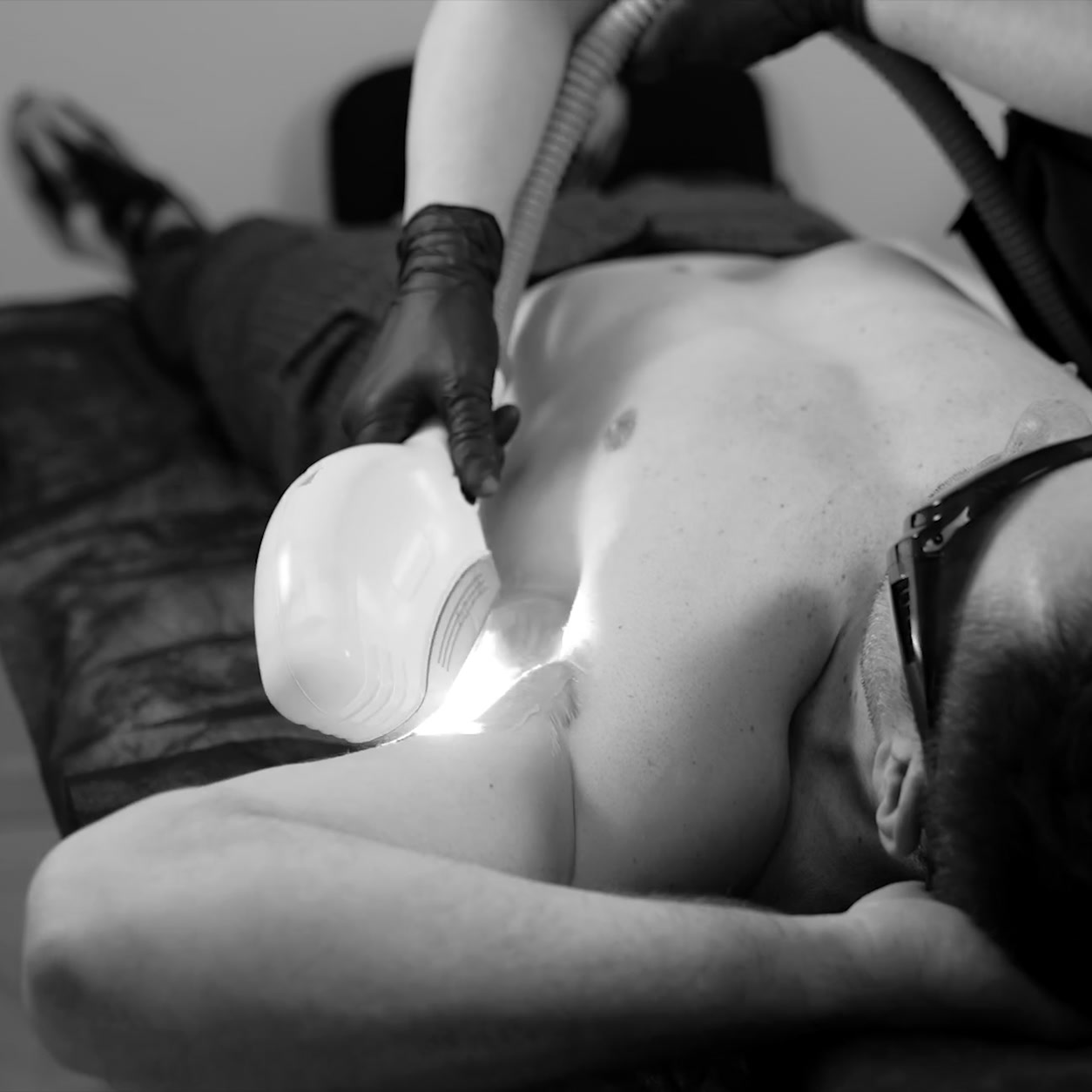
You Will Not Remember
Think about what your skin looked like the week before your first session. Most people cannot.
Hair removal works slowly and unevenly, and your memory quietly updates itself as it goes. The chest you had in March stops existing the moment the chest you have in July becomes normal.
A photograph settles the argument. Your memory does not.
Why Session Six Feels Like Nothing Happened
This is the single most common point where people lose faith in a course of treatment.
By the sixth session the heavy growth is gone, so what is left looks like the whole problem rather than what remains of it. Clients tell me it has stopped working, when what has actually happened is that the baseline moved and nobody wrote it down.
Pull up a photo from day one and the conversation changes in about four seconds.
The Protocol
A before photo only works if the next one is comparable. That means keeping four things the same every time:
- same light, which means the same room and the same lamp, never a window on a different day
- same angle and same distance, so nothing is foreshortened differently
- same plain background
- clean skin, with no makeup, lotion or oil, since shine reads as texture
Taken on day one, then every few sessions. Not every visit, which turns into noise.
MY TWO CENTS
Inconsistent photos are worse than no photos. Two shots in different light will show a difference that is not there, or hide one that is. If the conditions are not repeatable, the pair is decoration rather than evidence.
Who Takes Them and Where
Your practitioner takes them, in a private treatment room, with the door closed.
Only the treatment area is in frame. They go on a secured device or on your own phone, whichever you prefer, and taking them on your own phone is a perfectly reasonable thing to ask for.

Where They Live, and for How Long
Clinical images are handled as health information, not as marketing material sitting in a camera roll.
At MAIR Care Inc. they are stored with the same safeguards as the rest of your health information, and they are never posted publicly without a separate written release. Treatment and consent records are kept for at least ten years from your last treatment, which matches the standard regulated health professions apply in Ontario.
The full detail is in the privacy policy, section six.
Who Actually Owns the Photo
This is the question people ask least and should ask most.
Copyright in a photograph generally belongs to whoever took it. Paying for the session does not transfer it, and the old rule that gave ownership to whoever commissioned a photograph was repealed from the Copyright Act in 2012.
The half that matters more to you works differently. An image of you is your personal information under PIPEDA, which means you can ask what is held, how it has been used, who it has been disclosed to, and for a copy. That right does not depend on who owns the copyright, and you do not have to give a reason for asking.
Consent Is Two Separate Yeses
Treatment photos and marketing photos are not the same decision, and anywhere that treats them as one has a problem.
- clinical images are optional, and taken only with your specific, informed consent
- using any image for promotion or training needs a separate yes, in writing
- promotional images are de-identified
- you can withdraw a promotional consent at any time, for future use
- saying no to either never affects your treatment, your pricing or your booking
If you are ever handed one form that bundles treatment photos and advertising into a single signature, that is the moment to slow down and read it.
MY TWO CENTS
A clinic that needs your face to sell itself is telling you something about its results. Before and after photos belong in a treatment file first. Anything beyond that is a favour you are doing the clinic, not a condition of being treated.
If You Do Want to Share
Some clients get genuinely pleased with their progress and want other people to see it.
Tell me, and we will do it properly. De-identified, written release, your call on the crop, and you can pull it later. Plenty of people hesitate to start because they have never seen a result on a body like theirs, so this does help.
Coming in Shaved? Take Your Own First
Laser needs the area shaved before you arrive, which means by the time you are in the room the thing worth photographing is already gone.
Take your own photo the night before, in decent light, before the razor. Put it in a hidden album and forget about it. In four months it will be the most useful thing on your phone.
More on what to do before an appointment in how to prepare and laser prep.
Bottom Line
Your memory is not a baseline. It rewrites itself as you improve, and then it tells you nothing is happening.
Take the photo on day one, keep the conditions identical, and know your rights over it. Clinical images are optional, marketing is a separate yes, and you can ask for copies or withdraw a promotional consent whenever you like.
Book your appointment and ask for your before photo. The only people who regret taking it are the ones who did not.