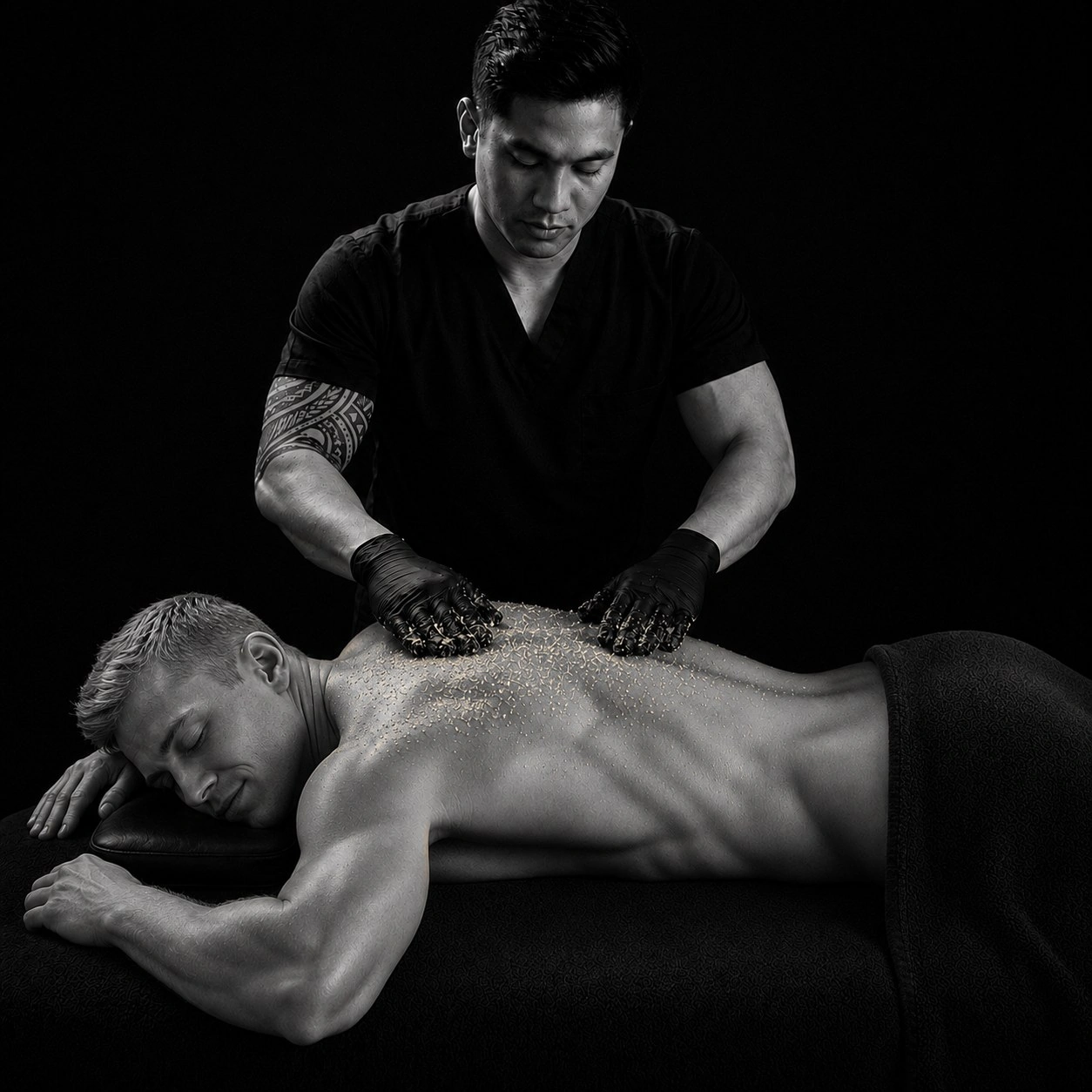
A Body Scrub Is Not a Sandblasting
Somewhere along the way, exfoliating got confused with punishing the skin.
The mental image most people have is a fistful of coarse salt and a lot of force, followed by skin that feels raw and looks red and gets called glowing.
That is not what happens at MAIR Care Inc., and the reason is not squeamishness. It is that the gentle version works better and the aggressive version carries real risk.
What Actually Happens in the Room
A mild sugar scrub, worked into the skin by hand.
The massage is not a separate step at the end. It is how the scrub is applied, which means the whole session is the two things happening at once.
Then you shower. You leave clean and smooth rather than gritty and looking for a towel.
No extractions. This is not a facial and nothing gets squeezed. If something on your back needs attention, I will tell you what I think it is and where to take it.
Why Mild Is the Point, Not a Compromise
The American Academy of Dermatology is blunt about mechanical exfoliation: it is not for everyone.
They name who should skip the scrub entirely:
- dry skin
- sensitive skin
- acne-prone skin
- anyone using a retinoid or benzoyl peroxide
- sunburn, or any actively irritated skin
- cuts, scabs or open wounds
Their technique guidance is gentle circular motions for about thirty seconds, moisturise straight after, and this: the more aggressive the exfoliation, the less often it should be done.
Read that list again and notice what it means. The risk is not in exfoliating. The risk is in doing it hard.
The Part That Matters If You Get Waxed or Lasered
Dead skin sits on top of the follicle. When a hair grows back into a surface that has closed over, it has nowhere to go, so it curls under and you get a bump.
That is the mechanism behind most ingrown hairs, and clearing the surface is the one thing that addresses it directly.
It will not fix an ingrown hair that has already formed, and it will not prevent every one of them. It removes the most common reason they happen at all.
Before you go at anything with tweezers, work out what it actually is. I wrote about telling the different bumps apart here, and a few of them should never be exfoliated.
The Tension Nobody Writes Down
Here are two facts that sit awkwardly together.
Cleveland Clinic notes that you are more likely to get ingrown hairs if you have skin of colour, or thick, coarse or curly hair.
The AAD says people with darker skin tones should avoid strong mechanical exfoliation, because of the risk of increased pigmentation.
So the people who benefit most from exfoliation are the people who can least afford it done aggressively.
That is not a reason to skip it. It is the entire reason the scrub here is mild, and it is why I would rather do a gentle treatment more carefully than a harsh one quickly.

How Often Should You Actually Do This
This is the question people actually want answered, and the honest answer has two halves.
At home, often and gently. A washcloth or a mild scrub in the shower, warm water rather than hot, small circular motions. That is maintenance and it is yours to do.
Here, rarely. A treatment is a reset, not a routine. Nobody needs this weekly, and I am not going to sell you a package that pretends otherwise.
How often you personally should come back depends on your skin, how much hair removal you are having and how the last one went. I will give you a straight answer at the appointment rather than a number off a price list.
Timing Around Waxing and Laser
Most clinics either get this wrong or say nothing. Three rules:
- one to two days before a wax, yes, and it actively helps prevent ingrown hairs
- the same day as the wax, no
- for 24 to 48 hours afterwards, leave it alone, along with hot baths, saunas, tight clothing and friction
The aftercare piece covers the rest of what helps healing and what quietly works against it.
What It Will Not Do
Every spa in the city claims a scrub reduces cellulite. Cleveland Clinic's position on that is not hedged: there is no scientific evidence for it, and any change people notice is temporary plumping from increased blood flow.
What it does do is remove dead surface skin, which makes skin smoother, helps clear the path for regrowing hair, and increases circulation while it is happening.
That is enough. It does not need embellishing.
Fifteen, Thirty or Sixty
The three durations exist because three different jobs come through the door.
Fifteen minutes, $40. One area, one problem. A shoulder, an upper back, the patch between the shoulder blades that nobody can reach.
Thirty minutes, $75. A full back, or two areas with real work in them. This is the one most people end up booking.
Sixty minutes, $150. Back, shoulders and chest, or a first session on skin that has been ignored for a while and needs the time.
If you are undecided, book thirty.
When Not to Book One
Some skin should be left alone until it settles:
- sunburn, windburn or any actively irritated skin
- an open wound, a healing scab or fresh stitches
- an active infection anywhere in the area
- an eczema or psoriasis flare
- within a few days of a chemical peel or a strong retinoid
Tell me when you book rather than when you arrive, and we move the appointment instead of wasting your trip.
Bottom Line
A mild sugar scrub, worked in by hand, followed by a shower. Fifteen, thirty or sixty minutes at $40, $75 or $150.
Do the gentle version at home often. Come here occasionally.
The people most prone to ingrown hairs are frequently the same people most at risk of pigmentation from harsh scrubbing, which is why the answer is not a coarser scrub. It is a lighter hand and more attention.
The full list of durations is on the skincare page.
If this is your situation, these go together. body shaving and trimming as a service, folliculitis and hair removal, hidradenitis suppurativa and hair removal, the diabetes and hair removal guide and the medications and hair removal guide.